Category Archives: National Register Nomination
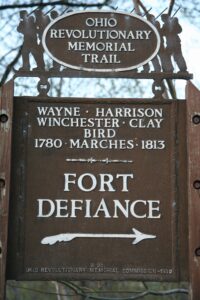 One of the original Ohio Revolutionary Trail markers, shot by Dale K. Benington, on April 6, 2010.
HDC Starts Work on Another National Register Nomination
HDC has been commissioned to prepare a National Register Historic District Nomination of the Village of Glouster, Ohio, to support development and renovation of historic buildings downtown. The nomination is being supported by a Pipeline grant from the Ohio Department of Development. Most of the buildings lie north of the railroad tracks on each side of High Street, with the buildings on the west side backing up to Sunday Creek. The main industry in 19th century Glouster was coal mining the Sundar Creek seam. Supporting industries included brickmaking (the Wassall brick Company operated from 1895 to 1932) and the railroad line (Michigan & Kanawha) had a freight and passenger station in town.
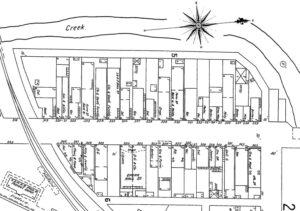
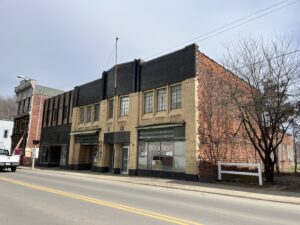
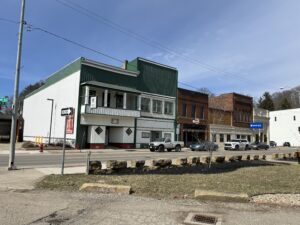
Top: 1896 Sanborn Insurance Map of Glouster; about half the buildings are still present.
Bottom Left: A block of buildings remaining on the west side of High Street. Bottom Right: Buildings on the east side of High Street.
Fall 2013
(originally posted by Andy Sewell on November 6, 2013)
Our quarterly update for Fall 2013 focuses on recent work we have done with historic buildings and historic districts. And of course, there’s a beagle update at the bottom!
HDC assesses the Canal Fulton Public Library’s moisture issues
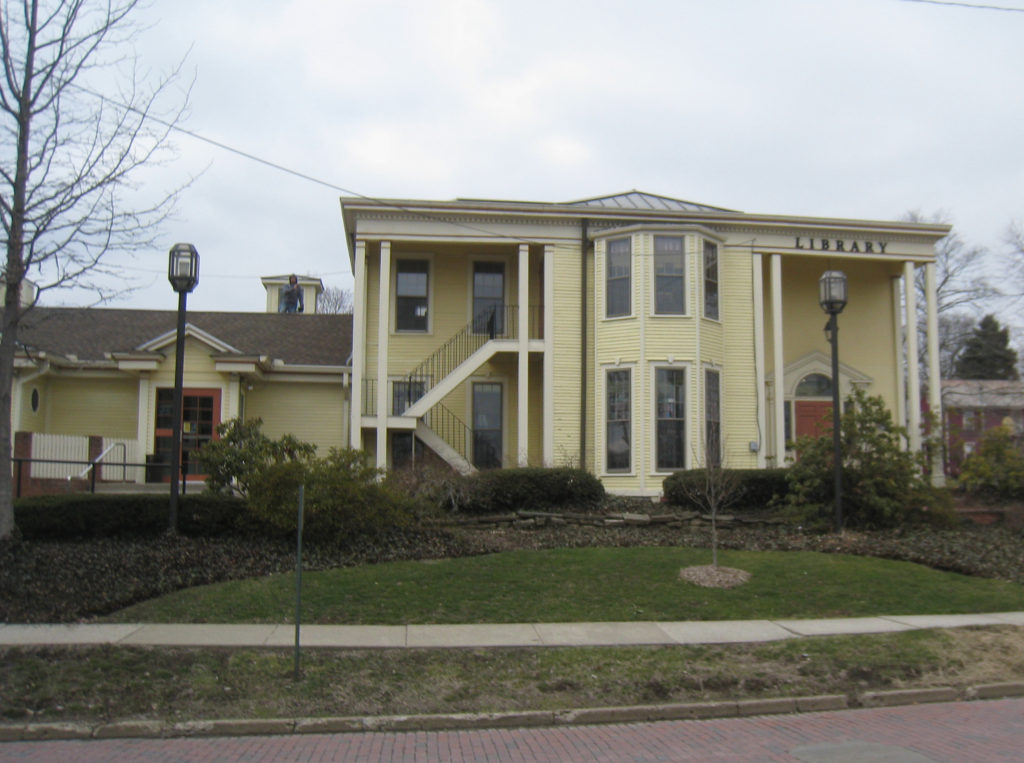
HDC completed a moisture penetration assessment of the historic Canal Fulton Public Library, which received a grant from the Ohio Historic Preservation Office. The original building was constructed in 1879 as a residence known as the Sullivan-Held House. The library moved into the house in 1949 and built an addition in 1958. The library is a contributing element of the Canal Fulton Historic District, which was listed in the National Register of Historic Places on December 2, 1982. In 1992, the library constructed a second addition, and in 2003 underwent a complete renovation, along with the erection of a third addition. The Library commissioned HDC earlier this year to identify sources of ongoing moisture penetration and to provide recommendations and cost estimates to remediate the problems.
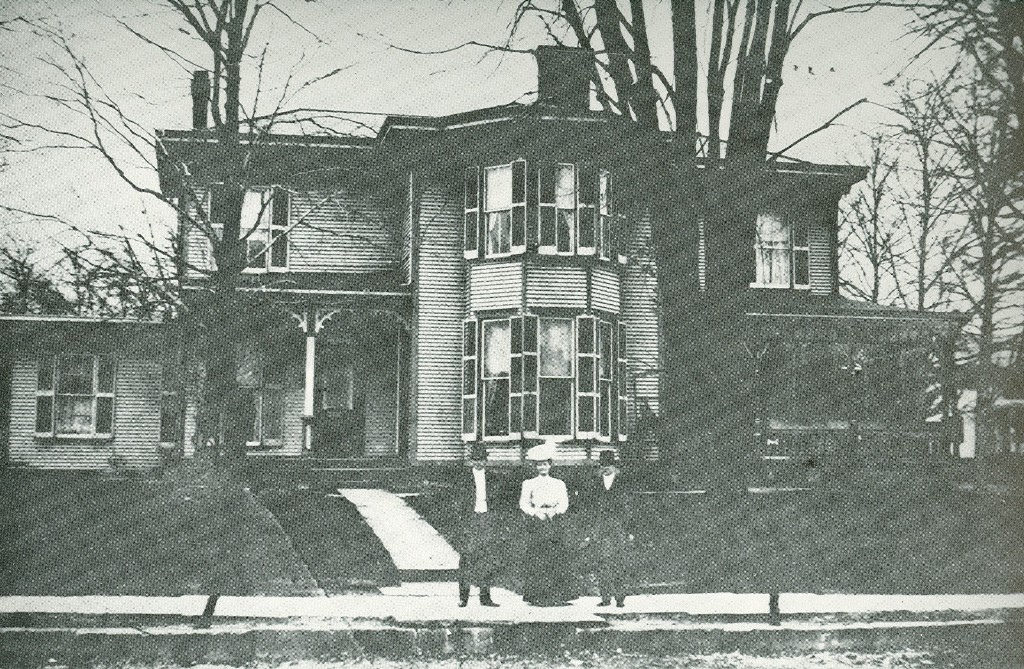
Canal Fulton Public Library, ca. 1882
HDC identified two active areas of active moisture penetration caused by improper installation of roofing materials in the previous renovations. In one area of the EPDM roof, improper slope caused water to pond, aggravated by improper roof drain locations and flashing details. In another area, EPDM roofing improperly overlapped an existing asphalt shingle roof, causing water to get under the shingles. Both of these problems could be easily remedied without adversely impacting the building’s historic features.
HDC also identified areas of excessive moisture content in the wooden siding, caused by too many coats of paint, as well as excessive humidity in the basement caused by an open crawl space. HDC also provided work recommendations and cost estimates for these items that followed the Secretary of the Interior’s Standards for Rehabilitation.
National Register Nominations in Middletown, Ohio
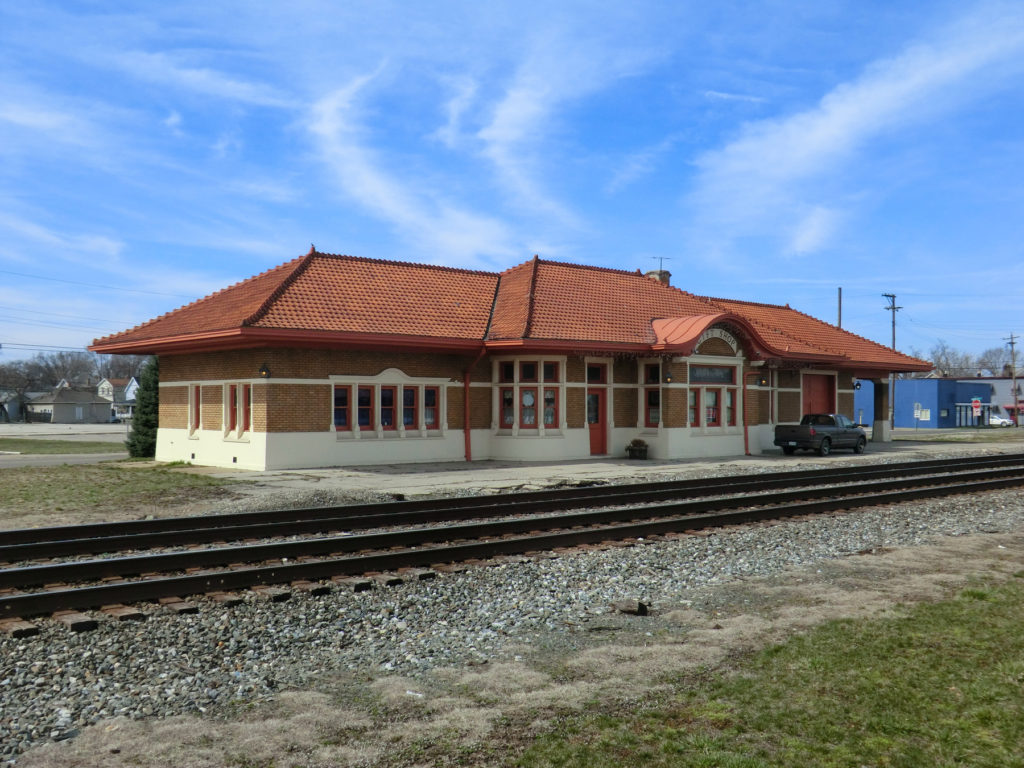
For the past several months, HDC has been working with Downtown Middletown, Inc., to list a former railroad depot and two historic districts in the city of Middletown, Ohio, in the National Register of Historic Places. The former Big Four Depot National Register nomination was approved by the Ohio Historic Preservation Advisory Board (OSHPAB) at the end of September and was sent to the National Park Service for final approval. The Main Street Commercial Historic District nomination will create a new historic district in Middletown to encompass several historic buildings along Main Street including its intersection with Central Avenue. A revised draft of the nomination will be reviewed by the OSHPAB during their December meeting. The Central Avenue Historic District will create a new historic district comprised of more than 40 of Middletown’s historic commercial buildings. This nomination has been submitted to the Ohio Historic Preservation Office (OHPO) for their comments. After the OHPO’s comments are received and addressed, the Central Avenue Historic District nomination will be sent onto the OSHPAB for their approval as well. By listing these historically significant buildings and districts on the National Register, they will be granted some protections from federally funded and/or permitted projects, and the property owners can qualify for historic preservation tax credits. In addition, listing on the National Register assists downtown revitalization efforts by adding a sense of significance to the historic downtown, and can be a source of pride for the local community.
Donut L-O-V-E-S her Backyard!
Since the day she came home from the shelter at the age of 8 weeks, Donut has just been obsessed with the backyard. Where our previous beagle (Bagle) would head straight for her supper dish when she got home, Donut heads straight for the back door for a chance to run around in the yard. One side of the backyard is separated from a public walkway by only a chain link fence, so Donut can seen everyone (and every dog) who walks by and bark at them. We discovered long ago that Donut has a 30-foot turning radius (she fought every tie out length until she got 30 feet), and have avoided putting in raised garden beds that would interfere with her ability to get up to full speed.

Donut posing with sunflowers from [her] garden Donut posing with gardening tools
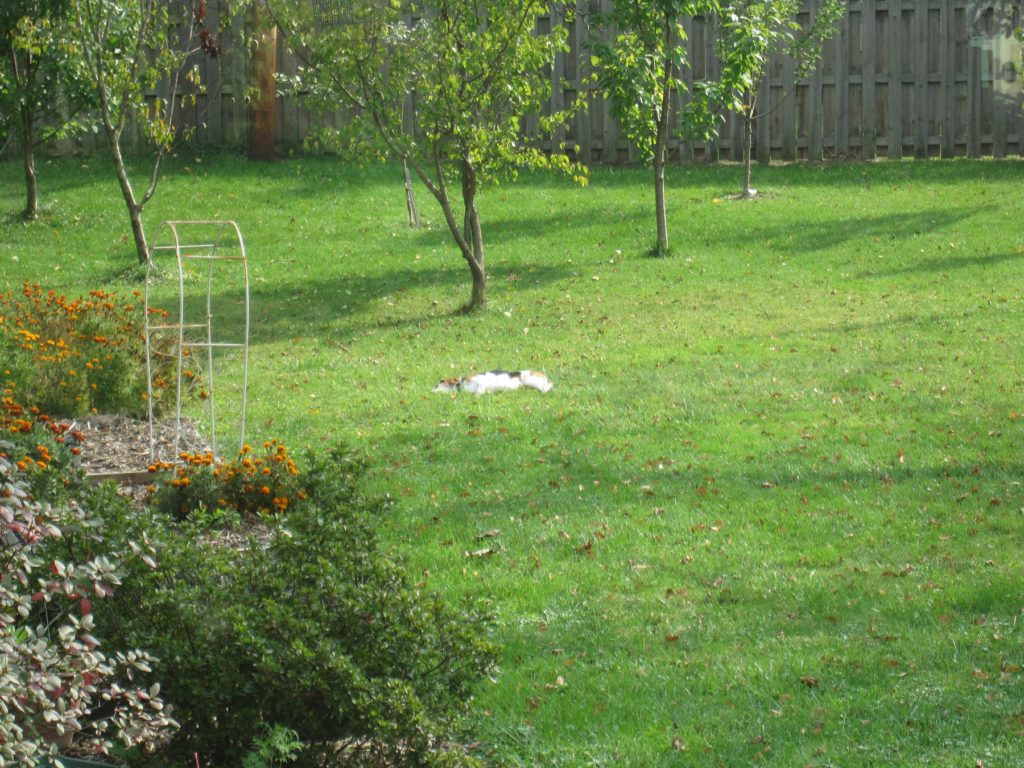
There are days when Donut will spend hours by herself outside, happily barking at passers-by and only coming in for a drink. Her favorite days are sunny cool days where she lays in the sun and soaks up the warm rays, but the ground is still cool enough to she won’t overheat. After an hour she flips over very slowly and does her other side.