HDC Blog

(by Andy Sewell, originally posted February 10, 2012) In 2005, Hardlines Design Company (HDC) was tasked by the Ohio Department
(originally posted January 27, 2012) Four things a client can do to speed up a survey before the contract is
Part 1, Sanborn Fire Insurance Maps (by Roy Hampton, originally posted January 12, 2012) If you’re interested in researching the
(by Charissa Durst, originally posted December 23, 2011) A Counter Argument in Five Points, or Why I Hate the Holiday
(by Charissa Durst, originally posted December 9, 2011) The Goldilocks Principle, or Third Time’s a Charm! The James B. Recchie
(by Charissa Durst, originally published November 30, 2011) Why do we offer architecture, history, and archaeology under one roof? The
(by Charissa Durst, originally posted November 8, 2011) Where did the name "Hardlines" originate? Back in the 1980s, after Don
(by Charissa Durst, originally published October 20, 2011) Everyone knows that garages are the birthplace of many a great company,
(originally posted October 20, 2011) Welcome to the Hardlines Design Company Blog! Welcome to our blog! Blogging is a new
This Fall's edition of What's New highlights the company's big move, showcases a rehabilitation project and a HABS project, and
Hardlines Design Company (HDC) was contracted to complete a historic study, building assessment, and redevelopment feasibility plan for the Dunbar
The Lincoln Theatre project included documenting, rehabilitating, and adding to a historic, National Register-listed, 1920s theatre that became the catalyst

Understanding a Shaker Shop with Historical Archaeology and Architecture

(by Andy Sewell, originally posted February 10, 2012)

In 2005, Hardlines Design Company (HDC) was tasked by the Ohio Department of Transportation (ODOT) to conduct a Phase III archaeological data recovery at the historic Shaker community of Union Village as part of the realignment of State Route 741 in Warren County, Ohio. The part of Union Village that we examined was the North Family Lot, which included a communal house and numerous shops and outbuildings, and was occupied by the Shakers from 1815 until 1906. No buildings survive at the site.

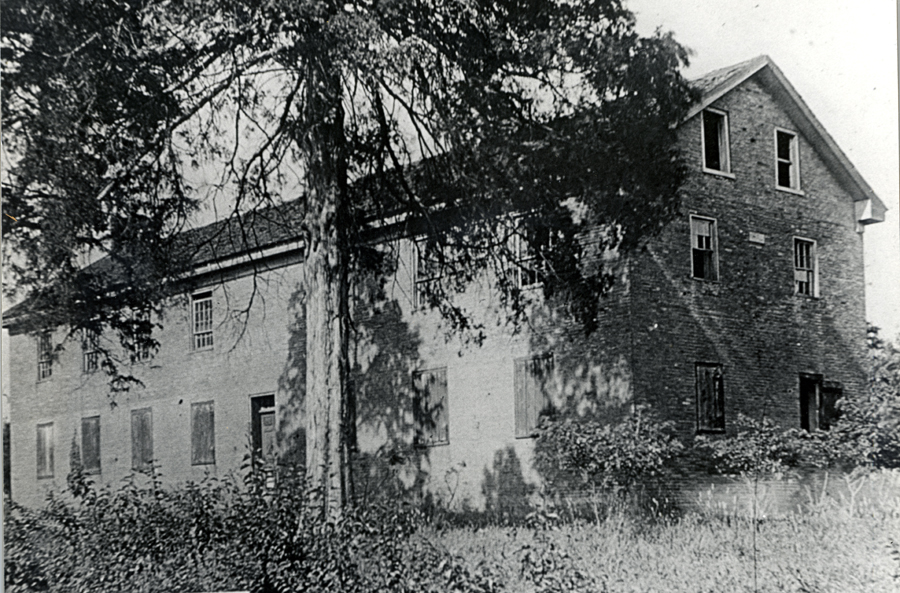
One enigmatic building was the Pottery/Broom shop, shown below in the only known historical photograph. Before our study, little was known about this building, but our historical research revealed that it went through several phases of renovations. The building began as a one-story brick smith shop in 1826, and in 1836, an addition was built to convert the building into a pottery; then in 1852, a second story was added to convert the shop into a space for making brooms.

The Pottery/Broom Shop at the North Family Lot, ca. 1915

Archaeological investigations revealed two styles of foundation. One foundation was built solely of brick, and a second one butted up against the brick foundation but was made of limestone, raising the question: Which foundation is the original smith shop, and which is the 1836 pottery addition? One hypothesis was that the original foundation was the limestone one, as the communal house and other early shops have similar foundations. Bill Faciane, an architectural engineer with HDC, visited the excavations and determined that the two foundations showed differences in the mortar–lime was present in the limestone foundation, but the brick foundation had only sand–indicating that the foundations were built at different times. Bill noted too that a southern interior foundation was brick, while a similar foundation to the north was limestone. Excavation of the trenches for the foundations also revealed a key difference: The trenches on the brick foundation had relatively few artifacts, while the trenches on the limestone foundation were filled with cast-off pot sherds from the pottery.

Hardlines Design Company archaeology crew excavating the Pottery/Broom shop location

Through the coalition of these three lines of inquiry and expertise, HDC was able to disprove the original hypothesis and instead conclude that it was the brick foundation that was the original smith shop, and the limestone foundation was the addition built when the pottery was active at the site. Further examples of how the synthesis of historical, architectural, and archaeological studies contributed to the understanding of the North Family Lot can be found in the four-volume report on the project, available as free PDFs at this link:

Encountering the Shakers of the North Family Lot, Union Village, Ohio

How Fast Can You Do That Cultural Resources Survey?

(originally posted January 27, 2012)

Four things a client can do to speed up a survey before the contract is signed

Quite often, when planning their cultural resources surveys (typically for compliance with Section 106 of the National Historic Preservation Act), our clients ask us, “How soon can you finish your survey?!” We’re always eager to start a project as soon as possible, of course, and the length of time it takes to reach the finish line depends on a number of factors. Some are pretty much fixed (like how long it takes to dig an archaeological test pit or complete a building inventory form), and weather can always help or hinder, but many other factors that affect the schedule are well within human control. With a little foresight and planning, that is.

Clients and consultants should of course choose the correct survey method, or consider alternatives that avoid areas that are likely to have archaeological sites or historic buildings.

But before the contract is even signed, clients can accelerate the process by thinking ahead and following these common-sense tips:

  • Before you ask a consultant to provide a proposal, make sure you have initiated consultation with your State Historic Preservation Office (SHPO) and know exactly what type of cultural resources services are being requested.
  • At the time you are selecting a consultant, make sure that your contracting department is prepared to initiate and execute a contract.
  • Before the contract is signed, have plans in place to stake the survey area or geo-reference your project footprint, so that as soon as the contract is signed, you can send the information to the consultant.
  • Before the contract is signed, prepare a letter to all of the property owners notifying them that survey crews will be on their land within a specified time period. As soon as the contract is signed, send the letters. Always give your consultants copies of this letter so that the survey crew has something to show the property owners to justify their presence on the property. And…your consultant will love you if your letter reminds the property owners to restrain aggressive pets and livestock (Yes, we’ve been threatened by dogs foaming at the mouth, flocks of nasty geese, at least one menacing ram, and numerous territorial bulls and excitable horses!)
So remember, there’s a lot of things that you can do, both large and small, to help speed up that survey!

Researching Your Property

Part 1, Sanborn Fire Insurance Maps

(by Roy Hampton, originally posted January 12, 2012)

If you’re interested in researching the history of an older building, you might be happy to find that quite a few free resources are available to you, both online and at local public libraries and government offices. One important source of information that is often overlooked is the Sanborn Fire Insurance map collection. Based on our extensive use of these maps for our projects, the staff at Hardlines Design Company has prepared a free, downloadable guide on how to use the Ohio Public Library Information Network (OPLIN) to access online Sanborn maps. This guide is the first in a series of free HDC guides or blogs–future entries will explain more about how to research older properties and their occupants using resources like city directories, archival maps, old photographs, deed and tax records, or just how to eyeball your property for physical clues that indicate changes.

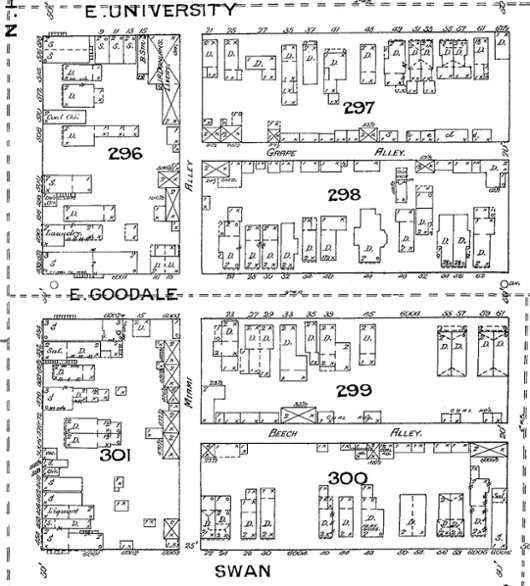
First produced in 1867 by the Sanborn Insurance Company to assess the risks of buildings, Sanborn maps provide a snapshot of the overall character of a building or neighborhood. If you’re researching the history of your house or business and are interested in when the property was built, what modifications have been made to it, and when different parts of the building were constructed, then you might find Sanborn maps quite useful. Or, if you’re studying the history and development of a particular city, town, or neighborhood, these maps can provide good evidence about the history of the community and how its buildings evolved (see sample below). The maps have long been useful to surveyors in the cultural resources business, but they are also freely available to individuals who just want to know more about the history of the property or community where they live or work.

Sample: Two Sanborn maps (from 1887 and 1922) are shown below to illustrate the kind of information these maps can yield. Each map is of the east side of High Street at the intersection of Goodale Avenue, in the Short North area of Columbus. By comparing the two maps, you can see that in 1887, High Street was a mix of small commercial buildings, duplexes, and single-family houses, but by 1922, larger commercial buildings dominated the area. More subtle changes are visible on the other east-west streets shown on the maps.

1887 Sanborn map:

1922 Sanborn map:


It’s the Most Wonderful Time of the Year! (or Not)

(by Charissa Durst, originally posted December 23, 2011)

A Counter Argument in Five Points,
or Why I Hate the Holiday Season
By Donut, one of the HDC beagles

Donut wearing bells and her “Merry Christmas or Whatever” expression.

I hate Christmas! I know, that’s a terrible thought since my Humans and most everyone else at HDC seem to really like it. This is my seventh Christmas, and each one is worse than the last. First of all, what’s with the costumes with bells? Especially the hats—I really hate hats! And then my Humans keep flashing lights at me and clicking at me with little metal boxes. Second, who keeps moving the furniture around? This year, my couch got moved to the other side of the room for a fake tree! Can you believe that?! I have to be ambidextrous to get on this thing now!

Third, what’s with all these deliveries! I’m barking myself hoarse keeping track of all the strange boxes that come through the door, and it happens at both my home and the office. And fourth, get this, they make me sit with some strange bearded guy in a red suit! I really don’t understand that.

He seems like a nice guy, but why does everyone want to sit on his lap?

Here I am with bells on!

And finally, do they really need to keep playing the same music over and over again? Okay, lots of humans have this issue, too, so I know I’m not alone. But there’s one song my Humans turn up really loud, and it seems to be on TV quite a bit, too. I’ve heard it so often I’ve put my own sentiments into it:

It’s the most miserable time of the year.
With the kids next door yelling,
and everyone telling you,
“Get out of here!”
It’s the most miserable time of the year!There’ll be couches for dragging,
and boxing and bagging,
Getting tossed in the snow!
There’ll be crates being loaded and
tales of being scolded from Christmases
long, long ago.It’s the most miserable time of the year.
I’ll be diving for cover
with trees tipping over
and so much to fear!
Oh, it’s the most miserable time of the year!

And in case you think I’m being a Grinch, it’s not just Christmas. I also can’t stand weekends or ball games or mobs of small children, but that’s another blog…

Lincoln Theatre Wins the Recchie Award!

(by Charissa Durst, originally posted December 9, 2011)

The Goldilocks Principle, or Third Time’s a Charm!

The James B. Recchie Award was established in 1984 by the Columbus Landmarks Foundation to honor those who have made exceptional advances in historic preservation and urban design in the central Ohio area. Since previous projects that received the award were designed by the most prestigious design firms in town, we here at HDC have always felt that the Recchie Award is one of the premier historic preservation awards in the state—and one that I’ve dearly wanted for the firm!

HDC began the addition to and rehabilitation of the Lincoln Theatre in 2005 with a master plan, with construction completed in May 2009. The 1928 Egyptian Revival theatre once was the heart of a thriving African-American neighborhood, but it had sat vacant for almost 40 years. The City of Columbus acquired the property in 2004 and recruited the Columbus Association for the Performing Arts (CAPA) to manage the building rehabilitation project. The Lincoln Theatre Association was formed with wide community support and a stated mission to “serve as the steward of the historic landmark theatre, as an incubator for talented, emerging artists.” This complex project was completed on such a fast schedule that when people asked what was our favorite part of the Lincoln Theatre project, we sometimes joked: “When it was over!” But today, we’d answer (this time, only half jokingly): “When we won the Recchie Award!”

Our path to the Recchie Award, however, was elusive, and the competition tough…

The 2009 Recchie:  Were we too small?
The Lincoln Theatre opened on Memorial Day of 2009, and we nominated the project for the Recchie Award by submitting a description of the project along with the benefits to the community. Five of the nominations were selected to be finalists, including the Lincoln Theatre, and needless to say, everyone involved was elated. The HDC design staff coordinated with the theatre staff of CAPA to show the three jurors around the building, and then we attended the awards ceremony the next day, with high hopes and crossed fingers. But the Recchie was awarded to the Ohio State University Thompson Library renovation, a large-scale, high-profile project to expand and modernize the beloved main library, one of the anchor buildings on the Oval at the OSU campus. We had to admit, the work was indeed massively impressive and well deserving of the award. So, we thought, maybe next year…

The 2010 Recchie:  Were we too big?
In 2010, we again nominated the Lincoln Theatre (thinking maybe 2009 was an anomaly), and the Lincoln again became a finalist. But this time, the Recchie Award went to a project on the opposite end of the size spectrum, the Franklin Park Residence and Gardens, a residential-sized project commended not only for its design but also for its community involvement and impact. Dozens of nearby residents came out to praise the gardens. Again, we had to admit, it was a beautifully executed historic house renovation, and one with an immediate community benefit.

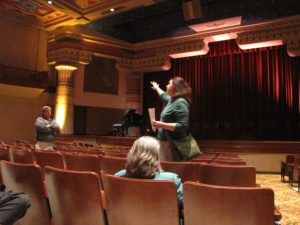
HDC architect Vivian Majtenyi explains the Lincoln Theatre project during the 2010 jury tour

The 2011 Recchie:  Surprise! This time, just right!
In 2011, we decided to skip the nomination while we gathered more operating data about the theatre’s affect on the community. So you can imagine our surprise when the notification arrived that—for the third time—the Lincoln Theatre was an award finalist! When we asked who nominated the project, we were told that all nominations are anonymous, and in this case, only the name “Lincoln Theatre” was submitted, with no description or justification. This time, for the juror’s tour, HDC and CAPA each sent three people, and we highlighted the jazz academy on the third floor, the rooftop patio (missed on previous tours), and the diverse uses of the theatre.

The Jazz Academy’s keyboard studio (left) and the rooftop patio (right) (Photos courtesy of Brad Feinknopf)

We arrived at the 2011 awards ceremony at the Franklin Park Conservatory with subdued expectations, aiming to enjoy the presentation for itself. At the end of the evening, when Nancy Recchie announced that the winner was the Lincoln Theatre, we were stunned! After the presentation, we were congratulated by many friend and peers, who said the award was well deserved and long overdue.

When our group got together to talk about the process, we surmised that this year, we had done a good job on the tour of explaining what the Lincoln Theatre was all about. During the tour, juror Patty Stevens, Chief of Park Planning at Cleveland Metroparks, was amazed that the three design representatives from HDC were all women and marveled at how one firm could have architects, historians, and archaeologists under one roof. Juror Cleve Ricksecker, Executive Director of Capital Crossroads and Discovery District SID, was very impressed by how heavily the theatre was used for non-traditional events such as graduation parties and funerals, and Mark Feinknopf, an Architecture & Planning Consultant with Sacred Space Inc., was a former resident of Columbus who remembered being in the theatre before the renovation. He was particularly moved by its revival. The three jurors also commended the design of the newly inserted balcony, which has been very successful with audiences!

The performer’s view from the stage, showing the new balcony at the back (Photo courtesy of Brad Feinknopf)

The audience view of the Lincoln Theatre, from the balcony looking at the stage (Photo courtesy of Brad Feinknopf)

At left: Here we are, just before the official presentation of the plaques (the rolled awards we’re holding are for being finalists). Left to right: Todd Bemis (CAPA, VP of Operations), Charissa Durst (HDC, President), Laura Piersall (HDC, Project Architect), Alison Badowi (Kabil Associates, Structural Engineer), and Vivian Majtenyi (HDC, Architect)
At right: The 2011 Recchie Award plaque

Epilogue
Too small? Too big? Just right! That’s the Goldilocks principle, and for us, the third time quite unexpectedly turned out to be the charm. We were also given an extra award plaque to present to Mayor Coleman, in recognition of his support in securing the initial funding for the project; we’ll be giving the mayor his award in mid December.

And so, on a happy note, we here at HDC give a hearty thanks to all who contributed to the Lincoln Theatre renovation and operations, making this award possible. Be sure and check out the history of the Lincoln Theatre, and don’t miss their calendar for unique events and shows!

The Lincoln Theatre project team:
Architect: Hardlines Design Company
Mechanical/Electrical/Plumbing/Engineer: Korda/Nemeth Engineering, Inc.
Structural/Civil Engineer: Kabil Associates
Acoustician: Acoustic Dimensions
Interiors/Furnishings: Williams Interior Design
General Contractor: The Quandel Group, Inc.

Also check out the announcement in the Columbus Dispatch.

The Hardlines Design Company Story Part 3 – Architecture, History, and Archaeology

(by Charissa Durst, originally published November 30, 2011)

Why do we offer architecture, history, and archaeology under one roof?

The tripartite structure of Hardlines was a natural outgrowth and evolution of the overlapping talents and interests of Don and myself, shaped over time through opportunity, hard work, and a little bit of serendipity. In the end, it allows us to offer our clients a unique combination of expertise in solving all kinds of issues related to ground-disturbing activities, ranging from roadway work to building construction and renovation.

The story really begins back in Massachusetts, where I grew up with an affinity for American history and the old buildings around me that so vividly expressed it. I thought hard about pursuing a degree in history, but my love of drawing and design led me to choose architecture instead. In the late 1980s, when Don and I were in architecture school at the Ohio State University, we both took preservation design studio and classes with Paul Young and Judy Kitchen, where we trained in preservation law and learned the ins and outs of researching historic properties, preparing Ohio Historic Inventory forms, and designing new buildings on historic sites. Although Don’s architecture thesis had a more graphic design orientation, I found myself opting for a written one that included historical research and technical reports.

p-revere-houseames-mansion

The Paul Revere House (above left) in Boston and the Ames Mansion (above right) in Easton, MA, two buildings that made a big impression on me when I was growing up.

When we graduated in 1990, we were not licensed architects, but our knowledge of how to research and document historic properties allowed us to dive into cultural resources projects such as HAER documentation at Wright-Patterson Air Force Base, historic building inventories for the Wayne National Forest, and historic preservation plans for the Submarine Base in San Diego and Hill Air Force Base in Utah. I functioned as the company’s architectural historian during the early years. (Don noted that at least I got to put my written thesis to good use!) When I became a licensed architect, my focus changed, and we hired other people to fulfill this role. One part of the company has continued in that vein, and HDC is still well known for high-quality architectural history and preservation planning services.

The architectural division of the company really began operations in the mid-1990s, when Don and I successfully petitioned the Ohio Board of Examiners of Architects to allow us to take the architect licensing exam without completing internships under other architects, citing our relevant experience operating our own company (see previous blog entry). Our request was granted, and Don and I were licensed in 1995 and 1996 respectively. Not surprisingly, the company’s architectural design department specializes in renovating existing (and very often historic) buildings, a satisfying blend of our natural interests and experience.

Several years later, in 1998, one of our engineering clients suggested that we compete for the new ODOT cultural resources Request for Proposal—when we saw that it had a proposal limit of 12 pages (most RFPs were unlimited), we decided it was feasible! We won the first of several two-year cultural resources contracts with ODOT, and at that point hired our first archaeologist, as the ODOT contract required at least one pre-qualified archaeologist to be available. And so began our archaeology department, which has since grown and is now equipped to handle all sizes of projects, from small archaeological disturbance studies to large, complex Phase III data recoveries.

One of the major advantages of having all of these specialties under one roof is our ability to complete interesting projects for a variety of clients. For example, under a series of task order contracts with Naval Facilities Engineering Command, HDC’s cultural resources staff has completed archaeological surveys, historic building inventories, and integrated cultural resources management plans. Our architectural staff has conducted historic building assessments and prepared recommendations and cost estimates for various reuse options. Sometimes, all three departments collaborate on the same project, such as the Data Recovery for the Shaker North Village site, conducted for the Ohio Department of Transportation: HDC’s historians completed literature review, archaeology staff conducted the fieldwork, and the architectural staff helped identify various infrastructure components associated with the building foundations.

Having all these specialties together also makes for more interesting work for our employees. Many of the non-archaeology staff (myself included) have put in hard labor on archaeological data recovery projects, and HDC’s historians continue to conduct literature review for the archaeologists and help with historic building assessments for the architecture department. Most non-architectural staff have clocked some time measuring buildings to be rehabilitated, such as when our archaeologists crawled through and measured old tunnels under the Lincoln Theatre, an award-winning renovation project.

mike-in-lincoln-theatre-tunnel

One of our archaeologists maps out the layout of the tunnels under the Lincoln Theatre.

We were able to validate the direction of the company in 1995, when HDC became founding members of the American Cultural Resources Association, a trade organization for companies that provide cultural resources services such as archaeology, history, preservation planning, and historic architecture. There we met other firms from across the country that offered similar combinations of services.

I often help the historians by doing research at the National Archives in Maryland, which is near my parents’ home and gives me an opportunity to visit. And sometimes, while I’m waiting for requested materials in the main reading room, I remember why I almost decided to major in history instead of architecture. As it turns out, I’m very lucky to have a job where I can do both!

The Hardlines Design Company Story Part 2 – Our Name

(by Charissa Durst, originally posted November 8, 2011)

Where did the name “Hardlines” originate?

Back in the 1980s, after Don Durst and I had successfully completed several projects together at the University of Maryland, we started to joke about starting a firm. Don suggested something using our last names, like “Durst and Wang,” which prompted me to note that if his name was first, we should call the company “Durst Wang Inc.,” and use DWI as our acronym, complete with a fuzzy drunken-looking logo. And that pretty much ended the idea of using our names for the company. Years later, one of our employees asked me why we never used a reconfiguration of our names. I thought about it again briefly and realized that with a slip of the tongue, we could all too easily become erroneously known as the “Dang Wurst Company” in town. Again, another good reason not to use our names!

Seriously, the real reason we didn’t name the company after ourselves is because we thought employees would just feel better working for an entity instead of for two specific people. The name of “Hardlines” came about in 1988. Don and I had both spent summers working for the National Park Service preparing HABS/HAER drawings for deposit in the Library of Congress. The final drawings were produced using a “hardline” as opposed to freehand technique, and credit was given to the “delineator.” So, we named our newly formed partnership “Hardlines: Design & Delineation” and abbreviated it as HDLS.

In 2000, the partnership became a corporation, which required the official name to include the word “company” or “inc.” The staff at the time decided that the company name should be shortened, and after a vote, Hardlines Design Company (HDC) was declared the winner.

Another name changed occurred in 2005, but this time the name was mine: Wang became Durst when Don and I got married that year, after 20 years of being together and (most important) a year or so  after HDC bought out Don’s share of the business–we both knew that 24/7 hours of togetherness would have tested even the most devoted relationship. And so our partnership continued, just on a different track, and some might be tempted to add, for better or wurst!

The Hardlines Design Company Story Part 1 – Our Beginnings

(by Charissa Durst, originally published October 20, 2011)

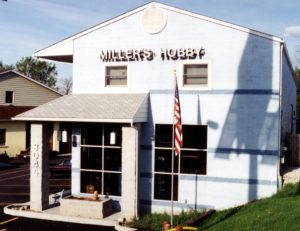
Everyone knows that garages are the birthplace of many a great company, and although Hardlines didn’t actually start in a garage, you could say a garage is what started it all! The company was founded by Don Durst and me (then Charissa Wang), who met as undergraduates at the University of Maryland School of Architecture in 1984. We both subsequently attended graduate school at The Ohio State University (OSU), and during spring break of 1990, our final year, Don rented an office over a hobby shop in Akron so he could prepare his thesis project in a private place away from his family. The owner of the building also owned an auto repair shop, and when he learned that Don was an architecture student, he asked Don if he could design a three-car garage for him to store cars. Don brought the project back to Columbus and asked me to help him with it. The date was April 28, 1990, and that became the official foundation date for the firm. The project expanded to include a three-bedroom living unit above the garage, with the hobby shop (owned by the wife) in the front, and construction occurred later that year. Our partnership was born—we just designed the garage instead of working in it!

miller-2-adj
When Don and I graduated from OSU in December 1990, we fully intended to do what most other graduates do: find a job and intern under other architects. Unfortunately for us, Operation Desert Storm was underway, and the country was in a recession. All of the firms we sent resumes to indicated we should try back later in the year. So, our careers took a brief detour–Don’s first job with a graduate degree was to work third shift at a parking garage, and mine was as a hostess in a Chinese restaurant!

In the summer of 1991, Don and I obtained summer jobs with the National Park Service (NPS) to prepare HABS/HAER* drawings at Wright-Patterson Air Force Base since we had some previous experience doing this work as undergraduates. After the summer work was completed, we persuaded the NPS to contract with our company to finish the project. As this project was winding down in the spring of 1992, the NPS recommended us to a client in Madison, Indiana, to finish HAER documentation of the Schroeder Saddle Tree Factory. We completed this work in the fall and decided to set up a permanent office in Columbus. And so the story of Hardlines begins…

red-bldg-adjusted


*Historic American Buildings Survey/Historic American Engineering Record

Stay tuned for next week: Why “Hardlines”?

Welcome

(originally posted October 20, 2011)

Welcome to the Hardlines Design Company Blog!

Welcome to our blog! Blogging is a new venture for Hardlines Design Company, part of a new direction we are using to reach out to our clients, our colleagues, and the public at large. We plan to use this space to share news about the company, discuss industry topics and trends, and offer special features you can download, such as instructional guides, white papers, and much more. Topics will include building preservation, cultural resources management, historic architecture, and other relevant subjects. Also be sure and check us out on Facebook for the latest happenings. Stay tuned!

We chose to begin our blog with a series of posts by our company president and founder, Charissa Durst, who will be writing about the history of the company, including the source of our often-asked-about name and the adoptions of our famous office beagles! Please enjoy!

overview_northbed2-crop

What’s New Fall 2016

This Fall’s edition of What’s New highlights the company’s big move, showcases a rehabilitation project and a HABS project, and a new video offering featuring Donut.

Hardlines Design Company Sells Cultural Resources Division to Commonwealth Heritage Group

On April 11, 2016, HDC decided to divest itself of the cultural resources department in order to focus on architecture, historic architecture, preservation planning, and architectural history. See the news articles in Columbus Business First and Clintonville This Week.

HDC Completes Rehabilitation of Historic Church

exterior-after-sunnyinterior-after-chancel

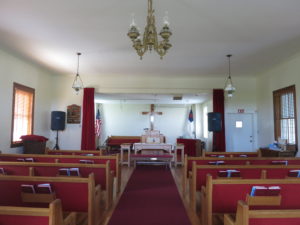
View of exterior (left) and interior (right) of the rehabilitated Wildermuth Memorial Church.

In the Fall of 2015, HDC was commissioned by the Wildermuth Memorial Church Board to prepare an assessment and recommendations report to rehabilitate the church for the congregation’s 200th anniversary in 2016. The church was likely built in the 1830s and then moved across the street to the current location in 1875 and moved further back from the road in the early 1950s to accommodate a road widening project. The Board approved the recommendations and commissioned HDC to move forward with the design and construction of all the recommended work. Exterior work consisted of a new faux wood shake roof on the church and a new asphalt shingle roof on the attached youth center, reconstruction of the furnace flue/chimney, and repair/refurbishment of the windows, siding, trim, and shutters. Interior work included removal of two levels of acoustical ceilings to restore the original ceiling height with a new drywall finish, removal of the carpet and restoration of the wood floor and base, and restoration of the original chancel floor with carpet only in the area of the 1970s expansion. The church held a 200th anniversary public open house on July 30, 2016, that was attended by almost 300 people.

HDC goes to Alaska for the First Time

1658-northeast-cornerinterior-looking-northeast

HDC was sub-contracted by Versar, Inc. to complete HABS documentation of a hangar proposed for demolition at Eielson Air Force Base near Fairbanks, Alaska, for the Alaska Air National Guard. In October, HDC President/Historic Architect Charissa Durst traveled to Fairbanks with Jeff Bates, who has been HDC’s HABS/HAER photographer for over 20 years. Building 1190 was one of four identical hangars constructed from 1946-1947 to prepare aircraft for transport to the Soviet Union under the lend-lease program after World War II. The other three hangars were lost to fire or demolished to make way for new construction. This hangar (Building 1190) was retained and has been used since 1958 as an air freight terminal under Air Mobility Command to deliver supplies to locations all over the world for all branches of the Department of Defense.

A Day in the Park with Donut

img_2515

If you ever wondered what exactly Donut does when she’s at the park, check out this compilation video:

Dunbar Theatre Architecture, Wichita, Kansas

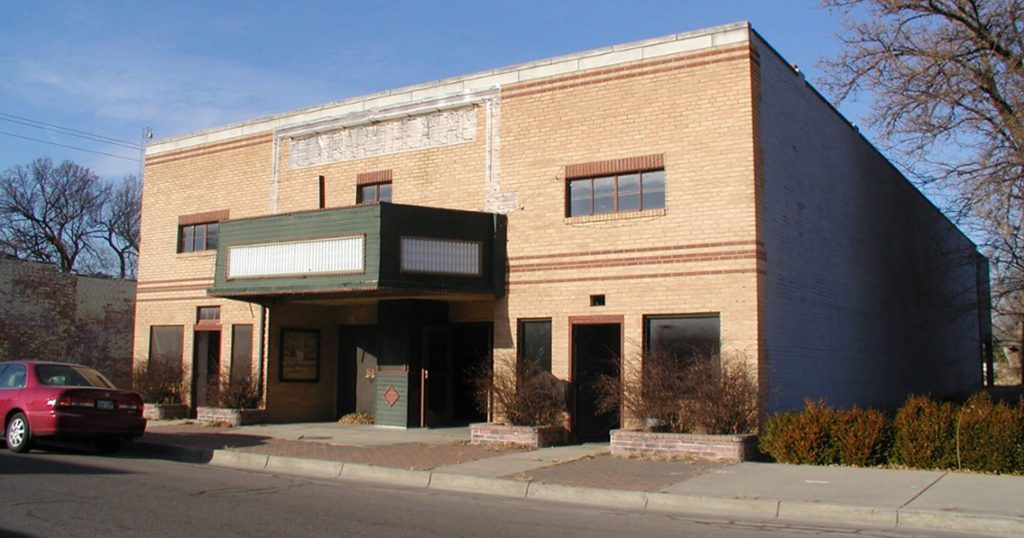
Hardlines Design Company (HDC) was contracted to complete a historic study, building assessment, and redevelopment feasibility plan for the Dunbar Theatre, a 1940s movie theatre named after the prominent African-American poet Paul Lawrence Dunbar. The theatre is a key element of the historic McAdams African-American neighborhood in Wichita. HDC reviewed and reported on the historical context that gives this building its significance, which included the fact that this theatre was the only venue in mid-twentieth century Wichita where African-Americanscould go to watch movies. HDC provided an interior and exterior condition assessment of the building with input from structural, civil, mechanical and plumbing engineers.

In collaboration with AMS Planning & Research, an Arts Research and Analysis Firm, local performing arts entities were identified and interviewed for their interest in seeing a restored and reprogrammed multi-purpose performing arts center developed in the Dunbar Theatre. AMS reviewed this information for economic viability within the Wichita context, with information from a nationwide Arts Database.

The completed project consisted of the historic study, a building assessment report with architectural and engineering evaluations, a market study and analysis that indicated project viability, a conceptual design study with an addition for the proposed new uses, a description of the anticipated new engineering systems, and a detailed cost estimate. The redevelopment project is currently underway with a private developer. You can follow the progress of the Dunbar Theatre redevelopment here.

Lincoln Theatre Architecture, Columbus, Ohio

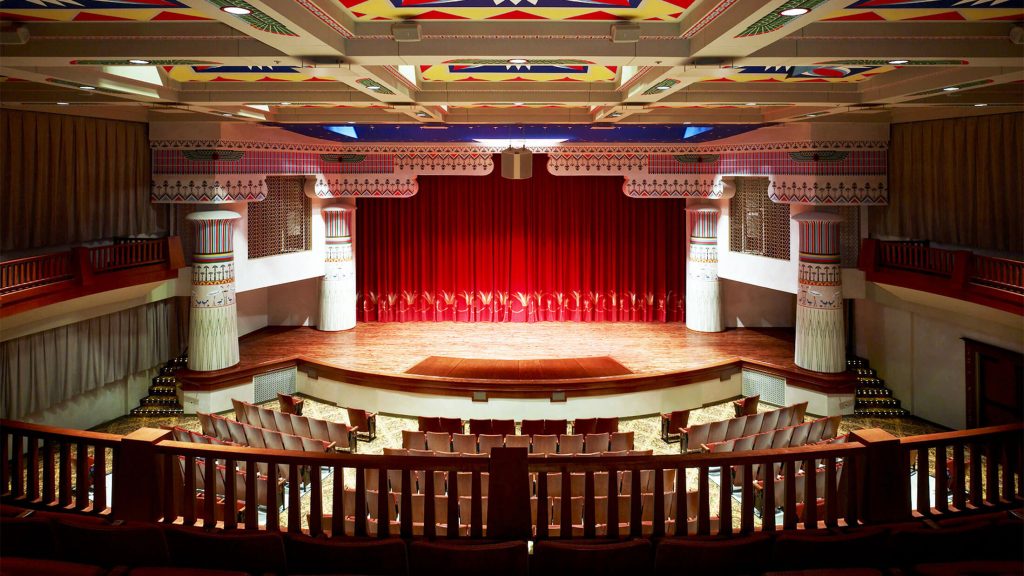
The Lincoln Theatre project included documenting, rehabilitating, and adding to a historic, National Register-listed, 1920s theatre that became the catalyst for the revitalization of a historic downtown neighborhood in Columbus. The building was originally a fraternity lodge and a key performance space for African-American jazz artists up through the 1960s, but was left vacant and allowed to decay for almost four decades.

The initial facility assessment project, with as-built drawings, proposed new uses while maintaining the Theatre’s historic integrity. Starting in 2007, the renovation project included masonry repairs, reconstruction of historic interior features, new seating arrangements, an expanded stage and orchestra pit, expanded backstage, and new patron amenities. The building additions included new stairs, a theatre balcony, an accessible elevator, dressing rooms, a green room, and a new two-story commemorative exhibition hall/jazz lobby with a concessions area. The renovation included sustainable design practices according to Columbus Mayor Michael Coleman’s “Green Initiative.”

The project received a 2009 Ohio Historic Preservation Office Merit Award and the 2010 Heritage Ohio award for Best Public Rehabilitation.