HDC Blog

After multiple years on hold for funding and more, the renovation of the Northcoast Behavioral Health Dietary Building started in
Kabil Associates is the lead firm on an ODOT-funded project to renovate a freight train into a meeting space for
HDC has been commissioned to prepare a National Register Historic District Nomination of the Village of Glouster, Ohio, to support
On July 26, 2025, Hardlines Design Company was honored by having our name included on a paver in the Walk
      Ziti happily going over a jump at a recent CPE trial (left) and posing calmly on a
      Left: Detail of attic dormer at the Clifton Opera House. Right: Detail of Sign Plaque at Clifton
      Left: View of west side looking north before construction. Right: View of west side looking south during
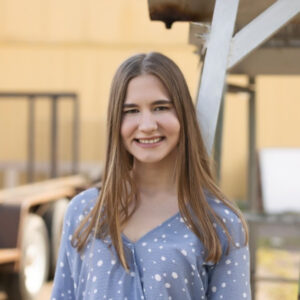
Clara Reed, an undergraduate student at the School of Architecture at The Ohio State University, worked at HDC in the
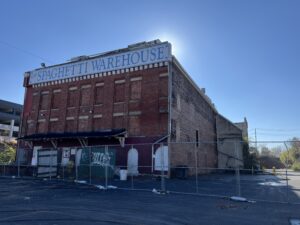
L: 1892 photo of when the building was the home of the Crystal Ice Manufacturing & Cold Storage Company. R:
      Ziti poses at the FastCAT runs sponsored by the Potomac Valley Afghan Hound Club (left) and Potomac
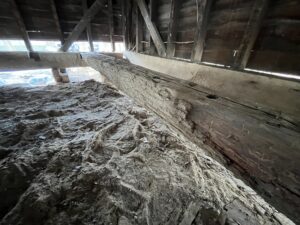
      L: Overall view of interior looking SE. R: Detail of floor beam with bark still attached. Dendrochronology
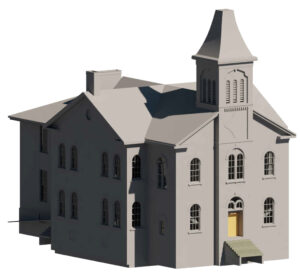
     L: Elevation of Cedarville Opera House by Existing Conditions. R: Model of Clifton School by Truescan. In 2006,

Northcoast Behavioral Health Starts Construction

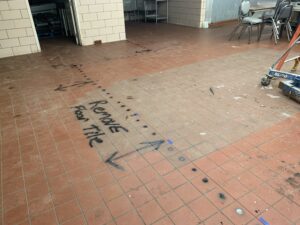
After multiple years on hold for funding and more, the renovation of the Northcoast Behavioral Health Dietary Building started in June! The general contractor is Feghali Brothers LLC out of Canfield, Ohio. Initial work consists of interior demolition to remove built-in freezers and coolers, asbestos abatement, quarry tile removal, and some exterior siding/fascia removal. The finished project will provide additional office space, including a meeting room and break room, and expand the existing restrooms to accommodate additional office workers. The expanded restrooms will be fully accessible and one of the office workers will finally stop sharing space with the server/IT closet!

     
L: The floor under one of the removed coolers will be leveled and prepped to accept a new floor finish. R: Quarry tile marked for area to be removed.

Gallipolis Freight Station Museum

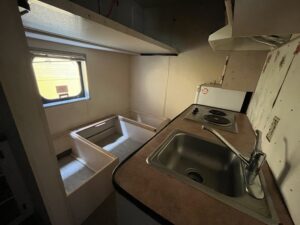
Kabil Associates is the lead firm on an ODOT-funded project to renovate a freight train into a meeting space for the Gallipolis Railroad Freight Station Museum. Hardlines Design Company is providing architectural and historic preservation consulting and Kramer Engineers is providing MEP services. The main architectural work is to finish the interior renovation of a passenger car to include an accessible restroom, catering kitchen, and a meeting room and to update the exterior painted finish. This passenger train once carried circus workers who lived in self-contained studios that had a kitchenette, bathroom, and fold-down bunk. One of the rooms is being converted into an accessible restroom and kitchen and the other will be restored back to its historic condition in the future. The project is expected to be bidding in late 2025!

     
L: The interior of the passenger car has already been partially gutted. R: One of the intact studio “apartments.”

HDC Starts Work on Another National Register Nomination

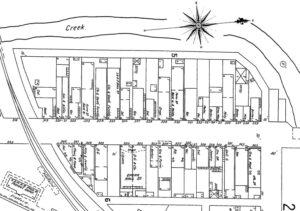
HDC has been commissioned to prepare a National Register Historic District Nomination of the Village of Glouster, Ohio, to support development and renovation of historic buildings downtown. The nomination is being supported by a Pipeline grant from the Ohio Department of Development. Most of the buildings lie north of the railroad tracks on each side of High Street, with the buildings on the west side backing up to Sunday Creek. The main industry in 19th century Glouster was coal mining the Sundar Creek seam. Supporting industries included brickmaking (the Wassall brick Company operated from 1895 to 1932) and the railroad line (Michigan & Kanawha) had a freight and passenger station in town.

        
Top: 1896 Sanborn Insurance Map of Glouster; about half the buildings are still present.
Bottom Left: A block of buildings remaining on the west side of High Street. Bottom Right: Buildings on the east side of High Street.

Hardlines Design Company Inducted into Lincoln Theatre Walk of Fame!

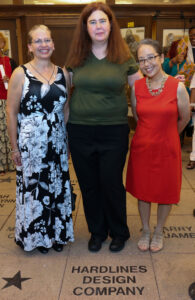
On July 26, 2025, Hardlines Design Company was honored by having our name included on a paver in the Walk of Fame area under the marquee at the Lincoln Theatre. Also inducted were the artist Elijah Pierce, whose family flew in from Texas to attend the ceremony, and the architecture firm Moody Nolan, represented by Jonathan Moody, son of founder Curt Moody. President Charissa Durst and Project Architect Vivian Majtenyi, both of whom worked on the Lincoln Theatre rehabilitation, were present. Jennifer McAdam of HDC also attended, which was her first (but hopefully not last!) visit to the Lincoln. In her speech, Executive Director Suzan Bradford stated that she always thought HDC should have had their name on the building somewhere, only to find out that Vivian had included the name of the contractor and HDC in hieroglyphs around the auditorium doors, and was now pleased that HDC’s name is now a permanent part of the building site. We at HDC are now looking forward on collaborating with Suzan on a book to mark the 100th anniversary of the building in 2028!
   
L: Jennifer McAdam, Charissa Durst, Vivian Majtenyi, and Suzan Bradford on stage at the Lincoln Theatre. R: Jennifer, Vivian, and Charissa with the HDC paver under the marquee.

Ziti Resumes Running in Agility Trials!

     
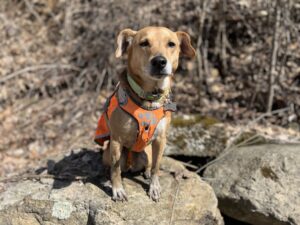
Ziti happily going over a jump at a recent CPE trial (left) and posing calmly on a sunny day in the park (right).
Ziti has been recovering so well and racing around the yard and parks like crazy that she has started attending agility trials again to dissipate that energy. We started her off in late summer 2024 with just one weekend day and a few events, moving to two weekend days with a few events each day, and finally moving in March 2025 to running all 9 or 10 events on both Saturday and Sunday. After such a weekend, Ziti goes in for some massage therapy and acupuncture. As the weather gets warmer she will be back on a FastCAT run as well! But sometimes, Ziti loves nothing better than just going to the park to run around (or pose) in the sun. Agility photograph by Deanna Norwood Photography.

3D Drone Photographs Assist with Exterior Envelope Repairs

     
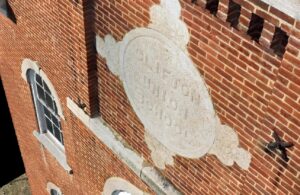
Left: Detail of attic dormer at the Clifton Opera House. Right: Detail of Sign Plaque at Clifton School.
HDC has been working on preparing construction packages to rehabilitate the historic Cedarville Opera House in Cedarville and the historic Clifton Opera House and Clifton School in nearby Clifton. All three buildings were constructed in the late 19th century and have varying degrees of roof, brick wall, and wood window deterioration. HDC commissioned MAJ Consulting LLC to take high resolution photos of the exterior of each building and stitch the photos together into a high-resolution 3D exterior model of the building that is so clear we can conduct an exterior assessment and prepare remediation drawings based on the model alone! This method is extremely helpful for steeply sloped roofs and tall buildings where exterior conditions had to be observed and assessed from the ground.

Detail of Fire Department Hose Tower at the Cedarville Opera House.

Carol Stewart Village Starts Construction!

     
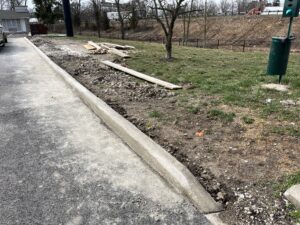
Left: View of west side looking north before construction. Right: View of west side looking south during construction with new curb and dog waste station.
HDC was commissioned by the City of Columbus to make improvements to Carol Stewart Village, a former 1980s hotel converted into housing for youths aged 18-24 who have aged out of the foster care system. Although the buildings had been renovated since the 1980s, the site around the building had not. HDC’s project includes the replacement of 70 packaged terminal air conditioners, or PTACs, ductless, self-contained air conditioning units that heat and cool small areas such as motel rooms and studio apartments. These units are also being anchored to prevent someone from breaking in from the outside. Sitework improvements include replacing crumbling concrete curbs and adding curbs where they do not exist now. The project also includes new dog waste disposal stations, which have already resulted in cleaner lawn areas. Another project repaved the parking lots. This project is just the beginning of improvements being made at Carol Stewart Village. Read about it in this Columbus Underground article.

HDC Welcomes Intern Clara Reed Back to the Office!

Clara Reed, an undergraduate student at the School of Architecture at The Ohio State University, worked at HDC in the summer of 2024, assisting with renderings for the Mount Zion Baptist Church renovation in Athens and preparing Revit construction drawings for the Ohio National Guard Tarlton Armory near Lancaster. In her final semester at OSU, Clara is working at HDC again, assisting with the Revit models for multiple renovation projects. We are also proud that Clara has been accepted into the graduate architecture programs at both the University of Cincinnati and the University of Virginia!

HDC Documents a Columbus Landmark!

L: 1892 photo of when the building was the home of the Crystal Ice Manufacturing & Cold Storage Company. R: 2024 photograph of the building that is half the size of what it once was
HDC was commissioned to prepare a Historic American Buildings Survey (HABS) documentation of the old Spaghetti Warehouse building on West Broad Street in Columbus prior to its anticipated demolition for new development on the site. I think just about everyone I know in Columbus has eaten there at one time or another. Since the restaurant was a landmark in Columbus for so long, part of the documentation package includes a 3D scan that can be converted into a video to allow the public to view. Unfortunately, the cost of scanning the over 29,000 SF building was more than the owners were willing to spend. HDC offered a compromise to use a non-construction accurate scanning method on just the restaurant portion that results in a walk-through model, which is less than the 25,000 SF maximum size Truescan’s equipment can handle. HDC’s president Charissa Durst prepared the historical report and plan drawings and HDC’s trusty photographer Jeff Bates took the photographs.
The Spaghetti Warehouse is a chain of restaurants that originated in an old pillow factory in Dallas in 1969. When the Spaghetti Warehouse opened in Columbus in a former ice manufacturing building in April 1978, it was the first location outside of Texas and with the ability to seat 800, was the largest location in the Spaghetti Warehouse chain. The Columbus restaurant was always a tenant in the building, occupying the entire first floor and the mezzanine level of the south wing. The kitchen occupied the center section of the building and the north portion had very low ceilings featuring a 1950s diner theme. The upper two floors of the north and south sections were used as storage. The restaurant had to evacuate the premises in March 2022 after the roof collapsed over the kitchen. Without needed repairs the building was deemed unsafe to occupy and the restaurant moved to a new location downtown at Columbus Commons.
Click here to read about the history of the building and click here to view the interior scanned model of the restaurant.

Ziti the Noodle Dog Improves with Every FastCAT Run!

     
Ziti poses at the FastCAT runs sponsored by the Potomac Valley Afghan Hound Club (left) and Potomac Valley Samoyed Club (right), where she earned her FCAT9 certification.
We’ve noticed that with every FastCAT 100-yard dash, Ziti’s time improves a little and her control of her legs also improves. So, for Thanksgiving, Ziti went to White Post, Virginia, to run twice a day for four days. It was fairly warm on Wednesday and Thursday, where Ziti posted the fourth fastest run for a medium-sized dog on Thanksgiving Day. Temperatures dropped on Friday and Saturday and every dog’s time, including Ziti’s, slowed as well. But, Ziti ran fast enough to earn a FCAT9 certification and move up to being the #4 beagle in the country for 2024!

Construction Opens up Macedonia Missionary Baptist Church for Additional Dendrochronology

     
L: Overall view of interior looking SE. R: Detail of floor beam with bark still attached.
Dendrochronology is the scientific method of dating tree rings (also called growth rings) to the exact year they were formed in a tree. HDC had previously utilized the College of Wooster Tree Ring Lab  in 2011 to date the logs used in the construction of the Deardurff House in Franklinton, Ohio. The house was known as the oldest structure in Franklin County still on its original foundation, built c. 1807. Dr. Greg Wiles took core samples in 2011 and determined that some of the logs were cut in 1798 and others in 1806, confirming the 1807 construction date, much to everyone’s relief! We suspect that the earlier logs were salvaged from the first shelter constructed by Abraham Deardurff and his teenage son before he went back to Pennsylvania to bring the rest of the family to Ohio.
Dr. Wiles came out to the Macedonia Church in the summer of 2024, but was unable to definitively date the logs since the ones he could reach were hewn and had lost their outermost rings. He asked to return when construction had started to see if better log candidates could be identified. Construction started in November 2024 and in December, the contractor, Mullins Construction found that termites had damaged the floorboards from below. The damaged floorboards were removed, exposing most of the original floor beams to view. Some of the floor logs still had bark, which makes them good candidates for dating. The Tree Ring Lab hopes to be on site this Spring to take samples from the wall and roof structure as well as the floor beams to get a complete picture of the building.
     
L: Front elevation of the Deardurff House after removal of wood siding exposed the underlying log structure. R: Dr. Greg Wiles taking a core sample in 2011.

HDC Dives into Working with 3D Scanning!

    
L: Elevation of Cedarville Opera House by Existing Conditions. R: Model of Clifton School by Truescan.
In 2006, The Kleingers Group, a civil engineering and surveying company headquartered in Cincinnati, conducted the construction surveying for our project at the Lincoln Theatre. After the project was completed, they came to our office to introduce a new service they had started on 3D scanning. After discussions on timelines and costs, we concluded that it was about the same cost to get a building scanned with drawings exported as it was for us to actually field measure and prepare the drawings. Field measuring in person also had the advantage in that we could also conduct a conditions assessment at the same time. However, it also poses a challenge if the building was very tall or not safe to measure in person.
This year, HDC opted for 3D scanning for the first time and worked with Truescan, who are the Kleingers team spun off on its own. The price was surprisingly affordable and the cloud model created by the scanning allows us to get dimensions for any part of the building without having to go out and measure it! It also offered efficiency as compared to typical field measuring. The scanner operator explained that the equipment has advanced quite a bit and what used to take 45 minutes to scan now takes 45 seconds. The equipment captures millions of pixels per second with 2 mm accuracy. HDC also utilized the company Existing Conditions to scan a different building at the same time.