HDC Blog

(by Anne Lee, originally posted October 11, 2012) I recently attended the American Cultural Resources Association's (ACRA) annual conference in
(by Charissa Durst, originally posted on October 4, 2012) We often take for granted the history of a neighborhood. Where once
(by Charissa Durst, originally posted on October 3, 2012) When facilities planner and architectural engineer Bill Faciane first started work
(by Andy Sewell, originally posted October 1, 2012 ) Hardlines Design Company would like to congratulate our friends at Schooley
(by Andy Sewell, originally posted September 27, 2012) It's that time of year again, when Columbus Landmarks presents the annual
(by Andy Sewell, originally posted September 27, 2012) Undertaking an historical building renovation provides you with an opportunity to combine
(by Charissa Durst, originally posted on September 7, 2012) In the past two months, my husband Don and I managed
(by Andy Sewell, originally posted on July 17, 2012) After fifteen years with Hardlines Design Company, senior historian Roy Hampton
(by Anne Lee, originally posted on April 11, 2012) A recent study on dogs in the workplace was published in
(by Andy Sewell, originally posted March 29, 2012) One of the most common questions clients ask us is whether their
(By Andy Sewell, originally posted March 15, 2012) The Southern Theatre in Columbus, Ohio, which also houses the Westin Hotel.
(by Maria Burkett, originally posted March 1, 2012) Route 66 is a treasure trove of American mid-century vernacular architecture. Many

The 2012 American Cultural Resources Association Conference: Takeaways

(by Anne Lee, originally posted October 11, 2012)

I recently attended the American Cultural Resources Association’s (ACRA) annual conference in Seattle, held September 6-8 – three days packed with educational sessions full of useful information. I learned that I can take a lot of notes very quickly – which is good since my brain has a limited capacity for remembering all the facts and tips I learned during the conference! If you are in the field of cultural resources management, attending an ACRA conference is a must.

Workshops and sessions fell into one of three topical groups: the Business of Business, Developments in the Technical Aspects of Cultural Resources Management, and Trade Association topics. For a technical specialist like myself, the topics covered in the business of business sessions were those most outside my comfort zone, and the ones I found the most thought provoking. Here are some of the highlights of the business sessions I attended, as well as a few of the useful tips and reminders I came away with:

  • Workshop: What Wins and Why? – The Art and Science of Winning Proposals. Presented by Joanmarie Eggert, LG, CPSM, Pacific Northwest Marketing Manager, Kennedy/Jenks
    • Highlight: Being introduced to how the concept of “bug dust” can be applied to proposals. While the term “bug dust” refers to the very fine dust created from the boring of a mining machine, the concept as applied to your proposal efforts refers to those proposal elements that have little influence on the award selection committee, which are ones that you should pay as much attention to as miners do to “bug dust” – very little, in comparison to the big things that matter.
    • Useful tips and reminders:
      • Do internal proposal debriefings to improve the process on future endeavors.
      • Do quality control reviews of proposals – for content and appearance.
      • Clients care about their project, not what we as consultants do, so focus your proposal content on the project you are going after.
      • Questions to keep in mind as you develop proposal content: Why do you want THIS project? What value do you bring to the project?
      • Don’t “we we” on the client – Emphasize the client and the project, not your firm ( “You,” not “We”).
      • Debriefings for winning proposals may be more useful than debriefings for losing proposals in identifying what to focus on in future proposals.
  • Workshop: Business Development – Uncovered/Proven Methods and Tools for Successful Client Development. Presented by Jon Davies, Vice President and Director of Client Services at BHC Consultants, LLC, and Traci Nolan, CPSM, Business Development Manager at GeoDesign, Inc.
    • Highlights: Recommendation to look up Ford Harding’s Rainmaking series.
    • Useful tips and reminders:
      • Learning the difference between marketing and business development
      • Assign people to business development that WANT to do it; your business development efforts will fail if the people assigned to carry them out have no interest in them.
      • Tailor business development efforts to a person’s style
      • Every employee plays a part in the business development cycle – you just have to figure out what someone is good at and utilize them in that aspect of your business development strategy.
      • Remember – business development is a numbers game – if you want more clients, make more contacts.
      • Clients are people just like you.
      • In a face-to-face meeting, your job is to listen.
      • Social media is good for recruiting employees and getting your name out there, but is unlikely to land you a job. Relationships win you jobs.
  • Marketing: Business Development Live! – 3, 2, 1 and ACTION – are you ready?Presentation consisted of three real life marketing professionals meeting with Scott Williams, Manager of the Cultural Resources Program at the Washington Department of Transportation, feedback from the potential client, and a Q&A session.
    • Highlight:
      • Seeing Kenda Salisbury’s brilliant portrayal of a really bad business development professional acting inappropriately during the first meeting with a potential client.
      • Useful tips and reminders:
        • Client relationships drive the professional service industry.
        • Don’t worry about bothering a potential client – pick up the phone and call. The person on the other end can choose not to take the call.
        • Make sure multiple people in a firm have contact with a client so you don’t lose contact with the client if a staff member leaves your firm. Vice versa, make sure you have contact with multiple people in a client’s firm so you don’t lose the client if your only contact gets a job elsewhere.
        •  Do not send literature to private clients. Instead, identify common clients and meet with the private firm to discuss how your company can help the private client win a project with mutual clients.
    • Marketing: It’s What You Don’t Say That Counts – How to Project Your Best Non-Verbal Self. Presented by Kenda Salisbury, CPSM, Director of Marketing at Historical Research Associates, Inc.
      • Highlight: Experiencing the limp handshake…
      • Useful tips and reminders:
        • Humans communicate in all kinds of ways that are unspoken and being aware of what those non-verbal cues mean will help you be more successful at business development.
    • Management: Strategies to Address Critical Leadership and Ownership Challenges. Presented by Ed Edelstein
      • Highlight: Definition of a leader as the person who is most contagious, whether positive or negative.
      • Useful tips and reminders:
        • There is a difference between explicit and implicit drivers in a company.
        • Company culture is heavily influenced by the implicit drivers of the leaders within a company.
        • You can become a “positive contagion” – your attitude is your choice.
    • Finance and Accounting: Key Financial Indicators – Building a Performance Dashboard. Presented by David James, CPA, CMA, Clark Nuber P.S.
      • Useful tips and reminders:
        • There is more to understanding a company’s financial health than accounts payable, accounts receivable, and the dollar amount of contracts awarded.
        • Hire a professional to calculate the benchmarks and interpret them for you.

Five Things to Keep in Mind About Historic Building Renovation

(by Charissa Durst, originally posted on October 4, 2012)

We often take for granted the history of a neighborhood. Where once stood an Art Deco office building, now sits a cookie-cutter strip mall. But what if an architect had taken the time to study the history behind the Art Deco building? How would they have gone about completing an historic building renovation that not only would house shops but could also have a positive impact on the neighborhood as a whole? By following a few guidelines, renovating a historical building doesn’t need to be the money pit many developers would have you believe.

Do your research. Understanding the history of a community will give you a huge advantage when beginning your restoration project. Just as architectural periods segue from one style to another, neighborhoods reinvent themselves over time. Through careful research, patterns will emerge that will help you tackle your project while maintaining the building’s integrity. Historically, research has always been a bit of a treasure hunt. Hours of library research often turned up scant details while other days you could immerse yourself in a building’s original plans. Luckily, the internet has opened up the world’s historical archives and sources such as Sanborn Fire Insurance maps collection give you an instant picture of a neighborhood’s character.

Review regulations. Every city has its own regulations on historical preservation. Taking the time to learn know your area’s regulations will definitely save you time, money and headaches. Submit plans early in the process; you might need the extra time to make design adjustments. Also, check the historical designation of the building you are restoring. Is it listed in the National Register of Historic Places or as a contributing structure to a historic district? Contact the state historic preservation office, the agency that oversees historic preservations, and ask if your project has any restrictions you’ll need to follow. Generally, historic renovations should follow the Secretary of the Interior’s Guidelines for Rehabilitation (link to NPS site?). Finally, check if your property is located in an area subject to review by a local area commission, architectural commission, or historical commission. I sit on the German Village Historic Commission here in Columbus, and believe me, we are way more strict with buildings in our district than a property that is merely subject to state or federal regulations!

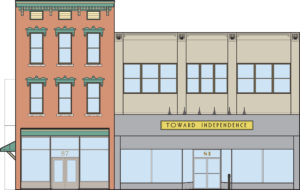
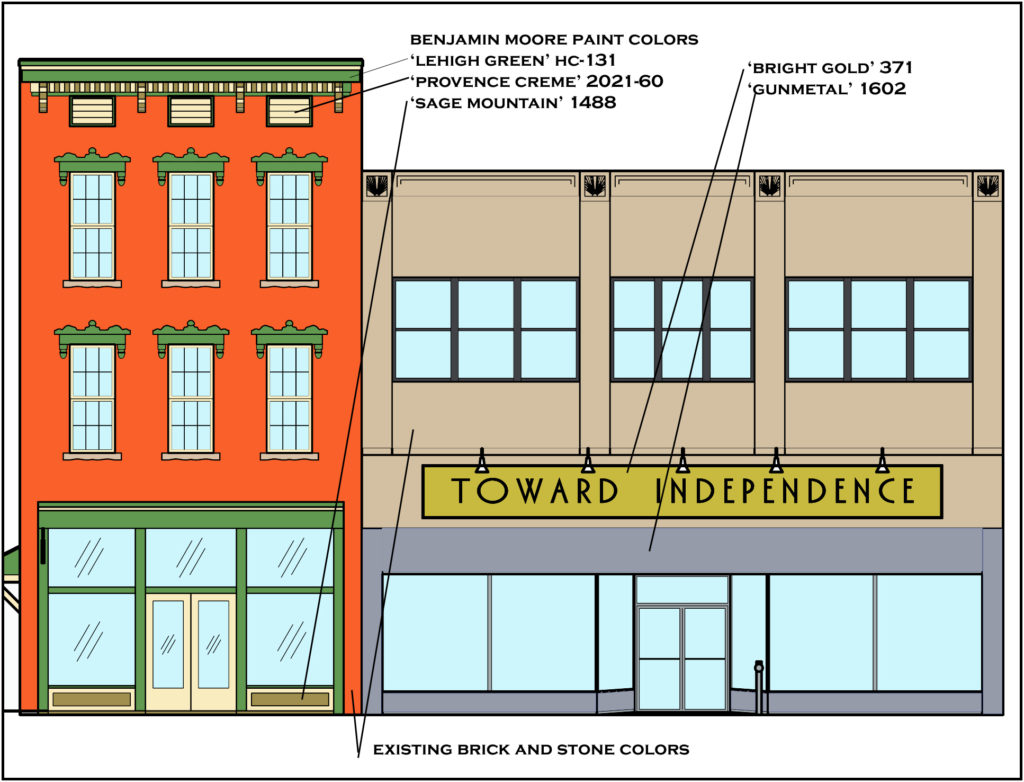
Secure funding. Historic building renovations can qualify for a variety of federal grant programs. These programs, which help offset the high cost of preservation projects, have various requirements so make sure you know your projects parameters and goals before applying. The Main Street Grant program assists historic downtown areas retain their tradition and character.  Our company is currently working on a façade improvement project in the City of Xenia that was partially funded by a Main Street grant.

Rendering of proposed facade improvements in Xenia, Ohio

Federal historic tax credits and new market tax credits have been a source of funding for renovation projects since the 1980s. When coupled with state historic tax credits, a significant percentage of the project’s costs can be covered. Our Woodward Opera House project recently applied for federal and state tax credits, which allowed the project to expand from a $2.5 million “just fix-it” construction budget to an almost $15 million state-of-the-art performing arts center budget.

The Woodward Opera House in Mount Vernon, ca 1916

Reuse and recycle. Bringing modern conveniences and materials into your historical renovation can be a labor of love. By installing environmentally friendly products during your renovation, you can bring warmth and savings to your building. Reuse, restore or repurpose flooring you salvaged during demolition. Creating a ‘sustainable-use plan’ prior to construction will expedite the material recycling and help you organize the inventory for future use. If your goal is a sustainable project, consider obtaining LEED certification from the U.S. Green Building Council. A project earns points for each sustainable criteria met.  A total building renovation qualifies as a LEED New Construction project, which requires 40 points for basic certification, 50 for Silver, 60 for gold, and 80 for platinum. HDC is currently renovating a historic elementary school with the goal of achieving LEED for Schools Silver Certification.

Stewart Elementary School in Columbus, Ohio, with the original 1874 building in the front

Hire the Right Team. The pool of design firms that provide historic renovation services seems to grow as the economy shrinks and property owners stop building new and start focusing on maintaining their existing real estate. In reality, many firms actively avoid historic renovations because they are, as one engineer told me, “dirty.” The site can be full of unknown contaminants,  there are too many restrictions on the design work, and you never know what will be uncovered during construction that will require a sudden change in the plans. In a new construction project, all the mistakes are your own and you don’t have to deal with inherited issues. But if you ask most people, they would much rather live and work in a nicely renovated historic building than in a modern building. The materials, proportions, and craftsmanship of historic buildings just cannot be replicated today without breaking the bank.

Undertaking an historic building restoration doesn’t have to be a daunting task. Thoroughly researching the project before you begin will save you both time and money. Hiring the right team will save you headaches during design reviews and construction. The reward for your effort, though, is knowing you saved a piece of history for yet another generation to cherish

Bill Faciane: 15 years of Service at Hardlines Design Company

(by Charissa Durst, originally posted on October 3, 2012)

When facilities planner and architectural engineer Bill Faciane first started work at Hardlines Design Company in 1997, he assured me he would work on anything we needed, except he would not pick out any colors. Bill came to us with a pretty impressive range of experience (Navy builder, construction superintendant, cost estimator, and facilities planner), so we found plenty of things for him to work on, including construction management, roof repair and replacement, interior renovations, and work on exterior building envelopes (To date, we’ve never had to ask him to pick out colors). A few years later, Bill told me he went to boot camp at Naval Station Great Lakes and swore he’d never go back. Well, that’s one promise I had to make him break multiple times, since we’ve had several projects there since 1998.

Bill Faciane, doing his thing

Bill also told me that when he worked at the City of Hampton as a facilities planner, he and his coworkers would pass around a Mr. Potato Head figure to whoever was the most ornery employee that month; Bill was proud to be its guardian numerous times. In honor of Bill’s 15th anniversary with HDC, we presented him with a gilded version of the legendary figure in honor of 15 ornery years and the hope of many more to come!

Congratulations to the 2012 Recchie Award Winners!

(by Andy Sewell, originally posted October 1, 2012 )

Hardlines Design Company would like to congratulate our friends at Schooley Caldwell Associates and Burgess & Niple, who were on the teams that jointly won the 2012 James B. Recchie Award on Thursday, September 27th. “A River Runs Through It” could easily describe the projects that won this year: the Scioto Mile project (project team member: Schooley Caldwell Associates), and the Scioto River Bridges project (project team member: Burgess & Niple).

A full list of Columbus Landmarks award winners for 2012 can be found here.

Columbus Landmarks’ 2012 Annual Design & Preservation Awards Tonight!

(by Andy Sewell, originally posted September 27, 2012)

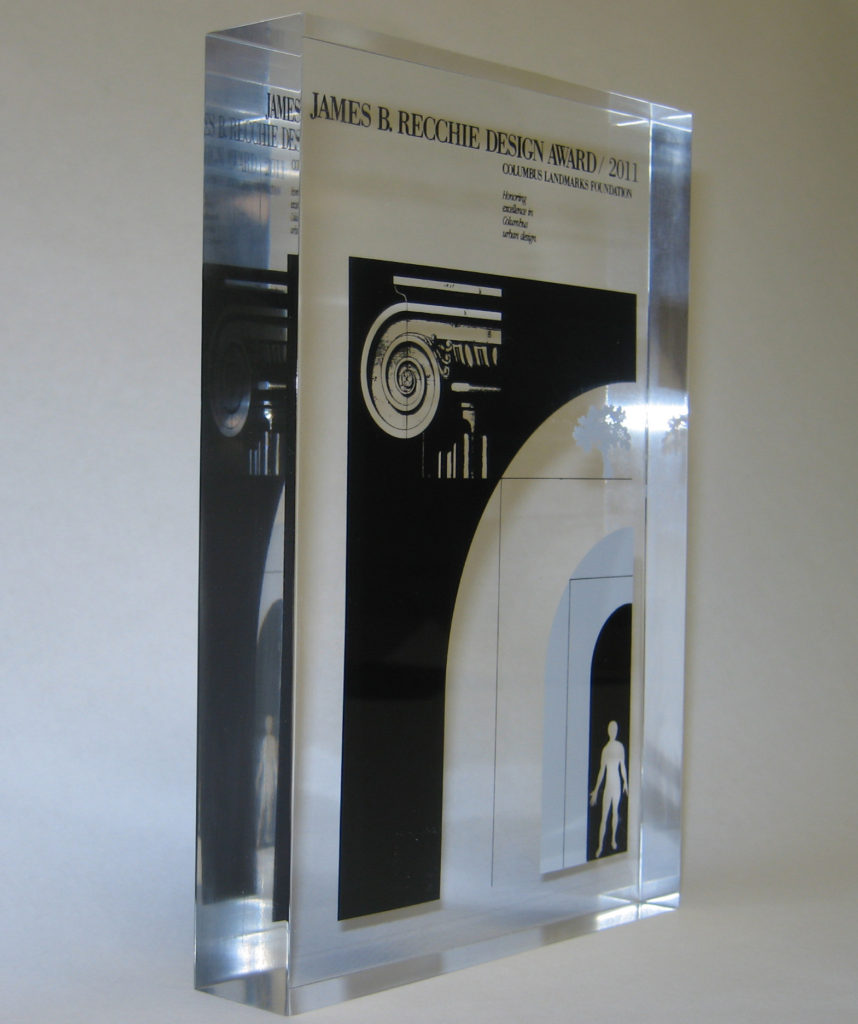
It’s that time of year again, when Columbus Landmarks presents the annual Design & Preservation Awards. Our friends at Schooley Caldwell Associates and at Burgess & Niple are nominees for the James B. Recchie Design Award honoring excellence in urban design this year.

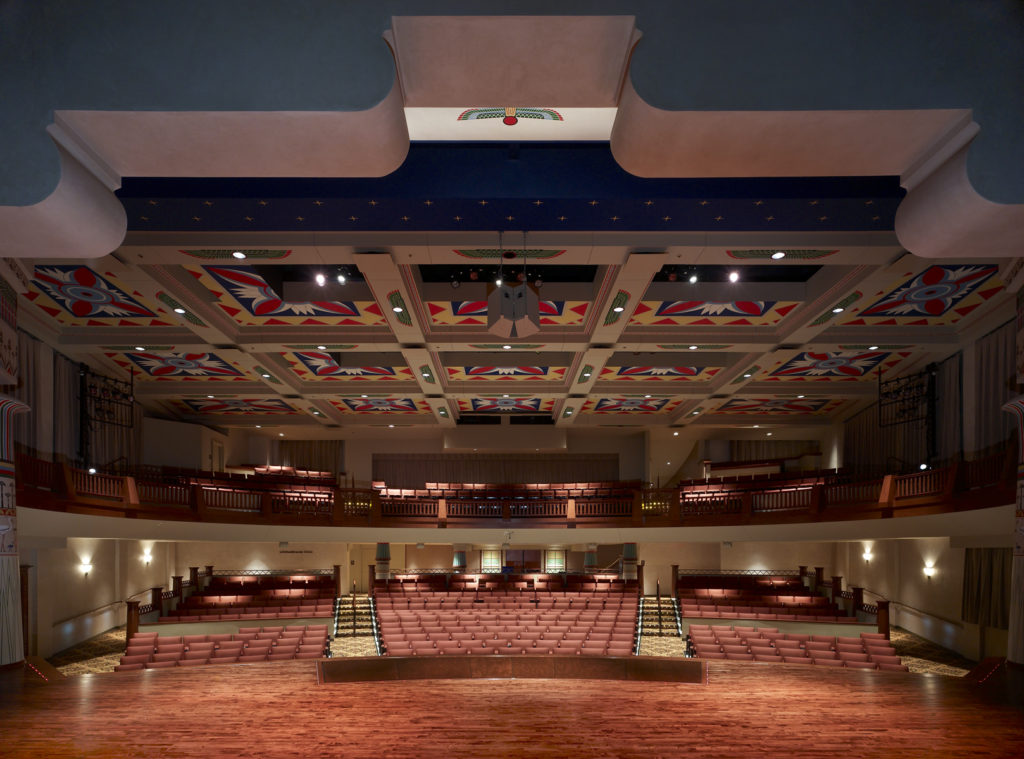
The event is being held at the historic Lincoln Theatre in downtown Columbus, one of our landmark projects and coincidentally (or not), the project for which we won the 2011 Recchie Design Award. Come and rub shoulders with Columbus’ best design professionals! (Hey, do you really need an excuse to take in the gorgeous Egyptian Revival restoration?)

Lincoln Theatre interior, as viewed from the stage.

Good luck to all the nominees!

Going Green with Historic Building Renovation

(by Andy Sewell, originally posted September 27, 2012)

Undertaking an historical building renovation provides you with an opportunity to combine the authenticity of the old with the latest technologies and concepts in green building. The U.S. Green Building Council (USGBC), the sponsor for the Leadership in Energy and Environmental Design (LEED), estimates that buildings account for 74 percent of the electricity used in the U.S. and 39 percent all energy usage.

The goal of the LEED program is to reduce carbon dioxide emissions by 50 percent, an ambitious commitment that’s only attainable on a one by one basis. Besides bringing an existing building into the 21st Century by using the latest building materials and techniques that increase its energy efficiency, rehabilitating an existing building saves raw materials and lowers landfill waste. Saving historic buildings also has an important social role by preserving the past for generations to come.

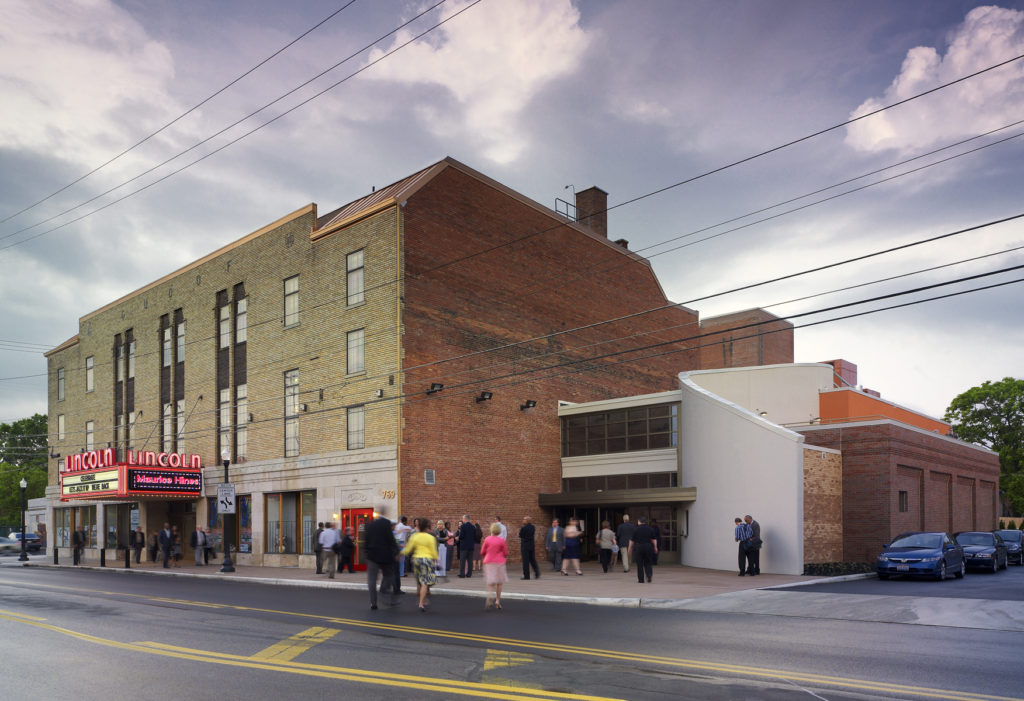
The Lincoln Theatre in Columbus, Ohio, renovated  to meet City of Columbus Sustainable Design standards

Planning the renovation of an historic building is complex to start with, but maintaining its historical integrity with the green building challenge makes the project that much more challenging. Fortunately, engineers, architects and designers with LEED credentials who respect the historical value of the building know how to marry the old with the new, such as those on staff here at Hardlines Design Company. The result is a building with that’s lighter on the environment because of the energy-efficiency intelligence designed into it and the recycling that takes place in the renovation process.

Using licensed and highly trained consultants who specialize in green and LEED building can help you navigate the design, approval and certification process, for both recognition as a green building and a sound historical building. These experts know how to combine energy efficient heating and cooling, lighting and air quality controls without damaging the components of the structure that contribute to its historical significance.

By working with the existing framework of the building and salvaging what’s significant and valuable, the project team can incorporate components that bring it up to the high standards for LEED certification or as a green building. High efficiency HVAC equipment, insulation, windows and ventilation techniques contribute to the greening of existing structures without interfering with their role in history, socially and physically.

Using old and new materials that don’t cause indoor air pollution has never been easier, since options for products that do not throw off harmful gases are many. Wood finishes with low volatile organic compounds are available for refinishing existing wood. Updating wiring with smart technology lowers the energy footprint, as does building in water conservation measures without disturbing the original fixtures.

The art behind using the original components, combined with modern construction practices, assures owners and developers that the final result will be a seamless blend of the best of the past with state-of-the-art engineering and design. It’s possible and desirable to combine the past with the best of the new to not only honor the history, but to respect the environment in the future, as well.

For more information on incorporating green design into your buildings, old or new, please feel free to contact us!

Heritage Tourism, Hardlines Design style!

(by Charissa Durst, originally posted on September 7, 2012)

In the past two months, my husband Don and I managed to take a couple of weekend days off and explore the sites at the Dayton Aviation National Historical Park. Don has a National Park Service passport book and is obsessed with getting as many stamps as possible. Dayton is an easy day trip and good for five passport stamps.

On a Saturday in late June, we drove to Dayton and stopped at the Wright Brother’s Memorial near Area B of Wright-Patterson Air Force Base. HDC actually worked on a project here in 2008-2009 to stabilize the archaeological mounds that ring the edge of the memorial site The memorial features a visitor center, memorial obelisk, and an overlook to Huffman Dam and the edge of Huffman Prairie Flying Field, where the Wilbur and Orville Wright perfected their flying machine in the early 1900s.

While at the visitor center, we picked up brochures for other area attractions and learned that if you visited seven of twelve aviation-related sites, you receive a free “Wilbear Wright” teddy bear, complete with goggles, scarf, and leather jacket. The bear looked really cute, so I was determined to get one!

The Wright Brothers Memorial provided one of the seven stamps. Next, we drove through downtown Dayton to the Wright Cycle Company complex, which consists of the shop operated by the Wright Brother and the Hoover Block, out of which the Wright Brothers operated a printing company. We received our second stamp at this location.

Next, we drove a few blocks further for our third stamp and a quick look at the Paul Dunbar House, jointly operated with the Ohio Historical Society. Paul Dunbar was a nationally-acclaimed African American poet who was also a friend and colleague of the Wright Brothers and their printing company. HDC did a study of Dunbar’s namesake theatre in Wichita, Kansas.

Paul Dunbar House in Dayton, Ohio

Our fourth stop was Carillon Historical Park, home of the 1905 Wright Flyer III. This was originally intended to be a quick stop to see the flyer and get a stamp, but on that particular Saturday the park was hosting a model train show. If there’s one thing my husband likes to do besides look at airplanes, it’s look at trains. So, we ended up staying at Carillon for the rest of the day, leaving me three stamps short of bringing the Wilbear home.

View of a Section of an N scale model railroad

So, on a weekend in early July, Don and I drove back to Dayton and headed south to see a working version of the Wright Model B Flyer and obtain our fifth stamp. Then, we headed back toward the National Museum of the United States Air Force for the sixth and seventh stamps (a separate one was issued for the Aviation Hall of Fame).

View of the Wright Model B Flyer

The Air Force Museum was packed, and trips to the hangars on Wright-Patterson Air Force Base were sold out earlier in the morning. Don and I had visited these once before, but not since they expanded into a third hangar bay. Oh well, maybe next time. Instead, we went to the newest section of the museum that we had not yet visited, which contained missiles and aircraft associated with the Southeast Asia and Cold War missions.

View of Cold War Gallery from the missile balcony

The missiles were displayed in their own two-story silo-like wing, arranged in a circle so the space resembled a columned temple. HDC had recently completed a project on the Nike Missile Battery in Cleveland, so I was actively looking for one. But, the museum did not have one of these missiles on display at this time.

View of missile display

Don and I also remembered with some amusement the advertisements plastering the billboards all over Dayton supporting either Lockheed’s YF-22 or Northrop’s YF-23 prototypes, one of which was due to be selected in April 1991 as the Air Force’s new advanced tactical fighter to replace the aging fleet of F-15 and F-16 aircraft. The YF-22 ultimately won that competition and one of the productions models was on display.

F-22 Raptor

In the Cold War gallery, my eye fell immediately on the slick black shape of the F-117 Stealth Fighter. When Don and I were working on the HAER documentation of Area B in 1992, we got a phone call from the base historian to get out to the old runway to watch a plane landing. We actually witnessed this fighter land on the Area B runway on its way to being curated at the museum. We were able to walk around the plane after it landed, but could not get closer than 10 feet while and armed guard stood on duty because its avionics were still intact. But, it’s pretty cool to be able to point to that plane and know that I saw it fly in and land 20 years ago.

F-117 Stealth Fighter

But what about the Wilbear? Don wasn’t happy about it, but I made him drive all the way back into Dayton to pick one up at the Wright Cycle Company complex rather than send for it by mail. But, the Wilbear is really cute and well worth the effort it took to get the seven stamps!

Wilbear with one of Don’s biplane models.

Good Luck, Roy! Hardlines bids adieu to our senior historian

(by Andy Sewell, originally posted on July 17, 2012)

After fifteen years with Hardlines Design Company, senior historian Roy Hampton has retired. Roy’s tenure with Hardlines was marked by several career highlights, including National Register nominations for Rockefeller Park in Cleveland and Wright Field at Wright-Patterson Air Force Base, numerous ICRMPs for the U.S. Navy, HAER documentation of the NASA Glenn Rocket Test Facility in Cleveland, and work for the U.S. Army Corps of Engineers, including the Ohio River Navigation Survey and documentations of several large dams.

We wish Roy (and Karly) the best of luck with whatever the future brings!

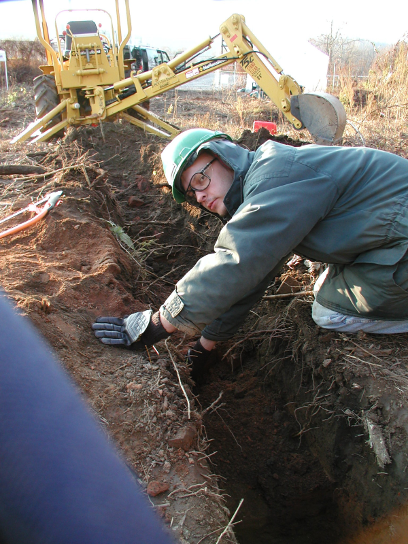
Roy, not afraid to get down in the dirt,  examining historical features at the Harmony Brickworks on a USACE project

Why We Have Dogs at Hardlines Design Company

(by Anne Lee, originally posted on April 11, 2012)

A recent study on dogs in the workplace was published in the International Journal of Workplace Health Management and subsequently reported on by the BBC (http://www.bbc.co.uk/news/health-17561272), who noted that “…access to dogs boosted morale and reduced stress levels, whether people had access to their own pets or other people’s.” At Hardlines Design Company, this doesn’t come as news to us!

Many people are pleasantly (or unpleasantly) surprised when they show up at our office and are greeted by the rather loud barks of a beagle. And, too, sometimes people can hear the beagle in the background when they call the office. People typically have one of two reactions when they realize that we have dogs in our office: (1) “Wow, it is SO cool that you have dogs at work!” or (2) a grimace and the unspoken look signifying “That’s a little strange for a professional office.”

So, why do we have dogs at our office? Well, a long time ago, Charissa (the owner of HDC) told me that one of the reasons she started her own business was that she wanted to be able to take her dog to work. So Charissa started her own business and started bringing her dog to work. First there was Bagle, a very mellow beagle by the time I started at HDC in 2002. A few years later, Bagle passed away, and Donut came along. Donut, also a beagle, is the opposite of Bagle—Donut is energetic, needy, very vociferous, and just a little skittish. Oh, and I think she has multiple personality disorder, but we don’t need to share that with her.

Bagle the Beagle: Our first office dog.

Donut as a young pup.

You do have to forgive Donut her foibles; she was found abandoned when she was only four weeks old, and we believe that many of her protective, and somewhat nervous tendencies, are the result of her very early life. During her next four weeks in the shelter, Donut acquired the nickname “Little Monster” because of her tendency to nip! Diligent training by Charissa, however, has resulted in a much calmer Donut. Rest assured, she does not snap unless you attempt to stick your hand in her food bowl or pick her up when she is stressed out. A few years ago, our Senior Historian Roy Hampton added Karly to the mix, a very quiet 5-year-old beagle, also rescued from the dog shelter. Most people don’t even realize that Karly is here; she is that unobtrusive.

To answer a subsidiary question I hear, yes, Donut’s barking can be distracting and a little shocking for those who are not prepared for it, but the counterbalance to that point is that the dogs add so much to the office environment. They are our mascots, our entertainment, our lunch companions, and our stress relievers. They greet us when we arrive, and they provide a warm and accepting presence when the day just isn’t going that well. Some say our office is “insane,” which may be true, but it is also humane, and that is, at least in part, a result of the great dogs who hang out with us all day.

3 Questions to Ask about Needing a Cultural Resources Survey

(by Andy Sewell, originally posted March 29, 2012)

One of the most common questions clients ask us is whether their project really needs a cultural resources survey. Determining if a cultural resources survey is necessary depends largely on whether a relevant federal, state, or local law applies to the project. That is to say, is the project under the purview of a federal or state authority or funding source that requires the project to consider the effect on cultural resources? Here are three questions you can ask yourself to help clarify the matter:

1) What is my funding source? If any of the funds that will be used for the project come from the federal government, even if they are administered by a state or local agency, it is highly likely that a review of known cultural resources or a complete cultural resources survey will be necessary. Common examples of government funding sources include:

  • Federal Community Development Block Grants (CDBG), which provide aid for a variety of local development concerns
  • The U.S. EPA’s State and Tribal Assistance Grants (STAG), which helps states and tribes pay for water supply and wastewater projects
  • Funds from the Federal Highway Administration, which are used by state and local governments for transportation projects

2) Will I need a government permit, certification, licensure, or other form of approval to complete any part of my project? If the project requires federal approval before it can proceed, then it is highly likely that some form of cultural resources review or survey will be necessary. Common examples of government permits or certifications encountered by municipalities and private industry include:

  • The U.S. Army Corps of Engineers Section 404 permit for projects that lead to the introduction of material from excavation, dredging and other similar activities into waters of the United States, such as lakes, rivers, and wetlands
  •  The Federal Communication Commission’s (FCC) approval for constructing new wireless communications towers (FCC Form 620)
  • The Federal Energy Regulatory Commission’s (FERC) approval for constructing interstate natural gas pipelines.

3) If federal or state funding or permitting is not involved in your project, is there a local ordinance that protects cultural resources or requires that cultural resources be identified before the project can proceed? For example, Anne Arundel County, Maryland, requires many developers to identify cultural resources as part of the proposed project’s planning and zoning review process.

Federal and state regulations can have confusing jargon and result in miscommunication. Take control of this situation with our series of guides about cultural resources regulations and compliance! The second guide in our series reviews federal and Ohio regulations that require certain types of projects to take into account their effects on cultural resources, like archaeological sites or historic districts.

If you still need guidance on whether your project must comply with cultural resources laws and regulations, contact your funding or permitting source. Another great resource for information is your state historic preservation office. Be aware that if you disregard or are simply ignorant of federal and state laws, you can significantly delay government funding and permits as well as exponentially increase the cost of your project! And in some cases, you may face legal ramifications. When it comes to cultural resources, it’s much better to be safe than sorry.

Economic Impacts and Historic Preservation

(By Andy Sewell, originally posted March 15, 2012)

The Southern Theatre in Columbus, Ohio, which also houses the Westin Hotel. The Southern Theatre opened in 1896 and was renovated in 1998

Historic preservation can be a very effective tool in strengthening communities, especially in a time of economic hardship and social change. The Advisory Council on Historic Preservation (ACHP) recently released a report on the economic impacts of historic preservation. It’s well worth the read. Some of the key points to consider:

  • Information on the relationship between historic preservation and economic impact is presented, although the authors note a general need for more data regarding jobs, property values, heritage tourism, environmental  data, and downtown revitalization efforts
  • While efforts are being made to collect this data at local and state levels, a coordinated research effort is needed on a nationwide scale
  • In addition to economic impacts, social benefits such as increases in community cohesion and quality of life should be considered
  • Revitalization of America’s small towns through programs such as Main Street (http://www.preservationnation.org/main-street/) brings a renewed focus on the local community and small businesses.

The ACHP’s study shows that while multiple efforts are being made to study the impact of historic preservation, further work is required to fully assess, document, and present the true economic benefits of historic preservation to our communities.

The ACHP’s report can be downloaded by clicking the following link, which will begin an automatic download of the PDF document:

I Slept in a Wigwam

(by Maria Burkett, originally posted March 1, 2012)

Route 66 is a treasure trove of American mid-century vernacular architecture. Many songs and movies have been made about traveling the historic route, which runs from Illinois to California. Built in 1926, the route has long passed its heyday, but it is still a bastion of culture for any fan of mid-century modernism.

I love signs–here’s one marking Route 66.I was so excited to be staying in an icon of the Mother Road.

Several years ago, I was in California doing fieldwork for a cultural resources assignment for Hardlines Design Company, and I found myself driving along Route 66 in San Bernardino, looking for a place to spend a few nights. After a little research, I made an amazing discovery: one of the original Wigwam Motels is located along Route 66 in Rialto, California, just outside of San Bernardino. I immediately booked a room. For any of you who are fans of the Disney movie Cars, the Traffic Cone Motel was modeled after this.

Seven Wigwam Motels were constructed across the country between the 1930s and 1950s to serve as roadside stops for people along the new highway system. The first Wigwam Motel was constructed in Horse Cave, Kentucky, in 1933 and is sadly no longer standing. The one in Rialto was constructed in 1949 and was the last of the motels ever built. Today, only three Wigwam Motels remain, located in Cave City, Kentucky; Holbrook, Arizona; and the one in Rialto where I stayed. The motels are all situated along popular early highways and are (or were) surrounded by other interesting roadside attractions. (For more on this topic, check back for future posts in this series.)

The wigwam motels were all constructed of poured concrete and then painted. They have a round plan and are a single story tall. The design for the wigwam’s was patented in 1935, and all of the wigwams were constructed exactly the same, with the only variety being the front office and the layout of the individual wigwam buildings.


Several of the wigwams at the Rialto motel

Wigwam Motel No. 2 in Cave City, Kentucky. Unfortunately, I did not sleep in these wigwams; I just drove past them on the way to Mammoth Cave about five years ago. While the wigwams have an identical design, the layout and setting is much different than the one in Rialto. All of these wigwams are in a single arched row around a large central wigwam, and the motel is in a more residential setting, surrounded by mature trees.

The Rialto motel is located in a commercial area of the city near fast food restaurants and car lots and is a distinctive landmark for residents. The motel is laid out as a series of teepee-shaped rooms around a central rental office and pool. Each wigwam consists of a single room with a small bathroom. The rooms have the original western-style furniture, including a wigwam-shaped mirror. One thing I was surprised about was the low ceiling; the room is not open all the way to the top.

The complex is in excellent condition and is lucky to have owners that care for the history and the future of the motel. The wigwams were meticulously restored several years ago by the present owners, and the complex was listed in the National Register on January 3, 2012, joining the other two extant wigwam motels.

I enjoyed sleeping in a Wigwam and would like to repeat the experience again in the future! Have any of you ever slept in a wigwam? What did you think of the experience? For more information on the history of the motel, or if you’re in Rialto and want to sleep in a wigwam, click here for the Rialto Wigwam Motel’s website.