HDC Blog

Best wishes for a safe and happy holiday season and a prosperous 2018 from all of us at Hardlines Design
HDC Welcomes Cathie Senter! Cathie worked with HDC on the Woodward Opera House in 2007, where she assessed the condition
HDC's office manager for the past 11 years passed away on August 7 after a long illness. Since 2006, Mej took care
HDC Says Good Bye and Good Luck to Intern Ellie Ervin! During her senior year, Columbus Alternative High School student
(Originally posted January 31, 2017) Hardlines Design Company (HDC) has a new look for our website! We've updated information and
(originally posted October 31, 2016) This Fall's edition of What's New highlights the company's big move, showcases a rehabilitation project
(originally posted on October 22, 2015) This Fall's edition of What's New showcases archaeologists in the field, historical building surveys,
(originally posted by Charissa Durst on March 13, 2015) 2015 is a special year for Hardlines Design Company. Twenty-five years ago,
(originally posted by Andy Sewell on March 3, 2015) Wilbur and Orville may have been looking to the future with
(originally posted by Andy Sewell on January 26, 2015) President Ulysses S. Grant knows his duty when filing taxes –
(originally posted by Andy Sewell on January 13, 2015) Annie Oakley, famed Ohioan, was known for being on the mark.
(originally posted by Andy Sewell on January 6, 2015) Yesterday marked the grand re-opening of the historic Stewart Elementary School

Holiday 2017

Best wishes for a safe and happy holiday season and a prosperous 2018 from all of us at Hardlines Design Company!

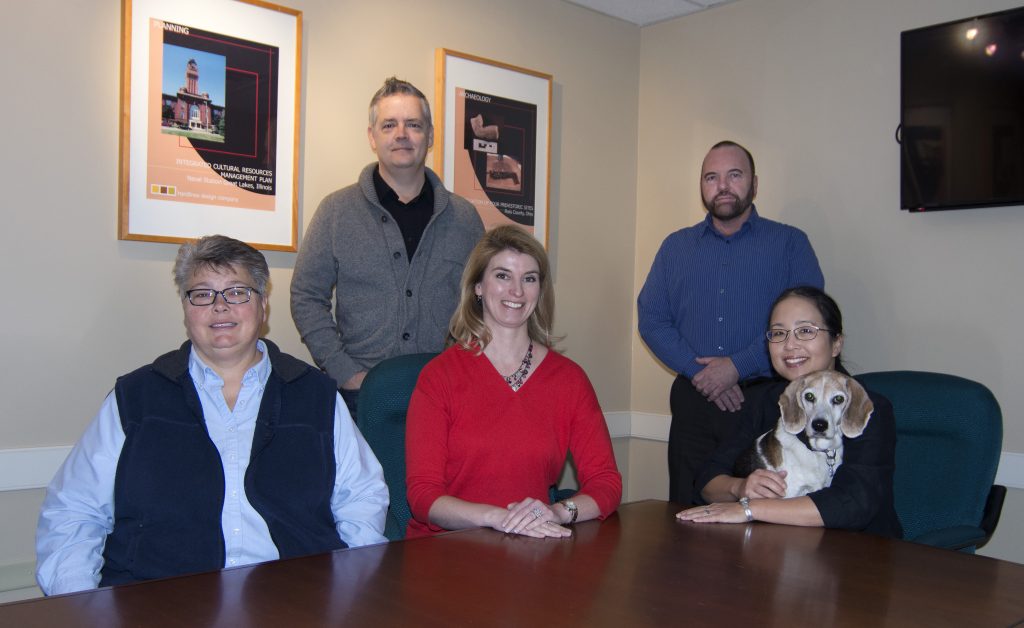
Cathie, Brad, Megan, John, Charissa, and Donut

And here are our canine companions, who also want to chime in:

Charissa’s beagle Donut, in 2017
Brad’s buddy Baxter, dressed up in 2016

Sadly, John’s dog Roscoe passed away in 2017; here he is in 2011
Megan’s baby Sherlock, in 2017
Cathie’s 14 years old Casey, in 2017

If you would like a copy of the 2018 Donut calendar, click HERE.


Fall 2017

HDC Welcomes Cathie Senter!

Cathie worked with HDC on the Woodward Opera House in 2007, where she assessed the condition of the wooden windows and prepared drawings and specifications for their repair. Cathie noticed that the second floor windows were originally 6-over-6, but the muntins had been cut out and they were reglazed as 1-over-1 windows. Because of the alteration, we were able to replace the windows with new insulated 6-over-6 windows that matched the other multi-pane windows on the building. In 2011, we worked with Cathie on implementing the first phase of the Historic Structure Report she had prepared for Five Oaks Historic Home in Massillon. After 7 years teaching at the Building Preservation & Restoration program at Belmont College in St. Clairsville, Cathie was ready to get back into designing and managing projects. When she contacted HDC, we snapped her up immediately! While moving to Columbus from Wheeling in late summer, we had her work on projects in nearby Belmont and Noble Counties, and she also conducted assessments of historic stone buildings at the St. Louis Arsenal.

HDC Receives Praise for Eielson Air Force Base Documentation


Cover sheet with maps and front elevation

Floor plan and building section sheet

The final version of the Level I HABS Documentation of Building 1190 at Eielson Air Force Base was reviewed and approved in July 2017 by Ms. Sylvia Elliott, Architectural Historian with Alaska’s Review & Compliance Office of History & Archaeology, who commented that “It was an excellent report.” The MOA required that the documentation drawings include floor plan, section, and the front and side elevations. However, HDC thought a drawing of the side elevation would not convey any more information than a photograph, and focused on adding a plan of a B-29 aircraft, for which the hangar was designed.

Click here for a copy of the final report: Bldg1190 HABS Report Final

Indian Mound Recreation Center Getting Ready to Bid


REVIT rendering of the proposed Indian Mound Recreation Center

HDC’s first major project with the City of Columbus Department of Recreation and Parks is the design of the new Indian Mound Recreation Center to replace an existing one constructed in 1970. The existing rec center was built during the energy crisis and has low ceilings and no windows, which is a major complaint by the staff. As the design progressed with multiple neighborhood meetings, it became clear that the new building would be larger than the $7 million budget. This prompted HDC Project Architect Brad Curtis to recommend that the City retain the gym from the 1970 building, which is still in good condition, and put storage and other less public functions into the existing building, thereby shrinking the size of the addition and meeting the budget. The project is scheduled to bid at the end of December.

HDC President Visits Taiwan and Japan


Taiwan’s Pacific coast on the one sunny day of the trip

Gassho (praying hands) thatch roof buildings in the Shokawa Valley, Japan

HDC President Charissa W. Durst spent 14 days in October accompanying her mother on an overseas trip. Charissa’s uncle had arranged a college reunion trip to Japan, but was two people short of getting a group rate, so her mom volunteered the last two people. Since her uncle’s college is in Taiwan, the group trip originated and ended in Taiwan. Charissa’s last trip to Taiwan was in 1983 when she attended a summer language school with her brother. During the last week of that 2-month trip the class toured Taiwan but was unable to make it to the east coast since monsoons washed out the road. The rainy season typically ends at the end of September and October is normally sunny and dry. Unfortunately, global warming extended typhoon season well into October this year and it pretty much rained every day in Taiwan and Japan. They made it to the east coast of Taiwan, but were unable to access the national parks due to dangerous road conditions from the constant rain.

Donut Gets Marooned!

Donut the Beagle made multiple trips to Prairie Oaks Metro Park this summer, and she frolicked in Big Darby Creek a record number of times. During one trip after a heavy rain, Big Darby Creek was higher than normal and the usual center islands were underwater. Donut had to make do (unhappily) with a rock.

HDC says Goodbye to Office Manager Mej Stokes

HDC’s office manager for the past 11 years passed away on August 7 after a long illness. Since 2006, Mej took care of bookkeeping, human resources issues, filing, and just about anything and everything to support the office. Mej will be fondly remembered by current and former coworkers for listening to our personal and office issues, bringing in home-made treats or getting the best caterers for office events, remembering everyone’s birthday, and giving Donut a morning treat. We will all miss her, and Donut will especially miss napping under Mej’s long skirts during the winter months.

June 2017

HDC Says Good Bye and Good Luck to Intern Ellie Ervin!

During her senior year, Columbus Alternative High School student and Clintonville resident Ellie Ervin interned at HDC one day per week. It was good timing for Ellie—she was able to attend several job site meetings at John Bryan State Park (from pre-construction through punchlist). She also helped take field measurements on a 0-degree winter day and conducted primary research at the Franklin County courthouse and historic city directories for the documentation of 790 East Long Street. A funny memory during the research was Ellie’s reaction to the directory notes that indicated which houses had a phone–Millennials! Ellie was accepted by multiple colleges and has chosen to attend the architecture program at the University of Cincinnati. We know she will be a success and hope she comes back often for her work-study internships at UC!

John Bryan Day Lodge Renovation Nears Completion

Completed Interior of the Day Lodge Looking East

HDC was commissioned by the Ohio Department of Natural Resources to renovate the Day Lodge in John Bryan State Park near Yellow Springs, which was built in the 1930s. Exterior work included a new roof, repair/replace deteriorated wood siding, new windows, and new paint finishes. Interior work included new floor finish, cleaning and refinishing the interior wood surfaces, and refinishing the historic one-piece table. Other improvements included adding PTAC units for air conditioning and heating, converting a wood burning fireplace into a propane gas one, new water heater, and new electrical panel.

HDC Documents Building on the Near East Side

Photo of 790-792 East Long Street in Columbus, Ohio, by Jeff Bates, March 2017

Columbus Next Generation Corporation commissioned HDC to document the building at 790-792 East Long Street prior to its demolition. The building is caddy corner from the Lincoln Theatre and is not structurally sound. The building was constructed c. 1875 and housed a grocery store on the corner with a residence next door and on the second floor. The residential areas housed a restaurant/bar for 100 years before closing in the 1990s. HDC prepared black and white photographs, a historical report, and measured drawings of the two accessible floor levels. The final documentation will be submitted to the City Historic Preservation Office and the Columbus Public Library for inclusion in their respective archives in perpetuity.

Donut Visits a Job Site

Donut poses by the southwest corner of the Day Lodge in April 2017

During fieldwork in 2016 and the cooler months of construction of the John Bryan State Park Day Lodge project in 2017, HDC president Charissa Durst often took Donut with her. After the project meeting, Donut would go for a long walk in the park. When the weather was too warm for her to wait in the car, Donut waited outside under a tree, tied to a picnic table. Once she barked and howled during the entire meeting, urging it to end so she could go on an expedition in the park.

January 2017

(Originally posted January 31, 2017)

Hardlines Design Company (HDC) has a new look for our website! We’ve updated information and images, and hopefully made it more informative and useful.

HDC welcomes Megan Claybon!

Megan joined HDC at the end of 2016 due to her interest in historic preservation projects. Megan holds a Master of Architecture and Certificate in Historic Preservation from the University of Southern California and a Bachelor of Science in Architecture from Georgia Tech. She has also studied abroad in Paris. Megan’s previous experience includes managing several Kroger supermarket design projects from programming to bidding as well as the design of historical style high-end custom residential homes. Megan is from Atlanta and she and her Boston terrier Sherlock are trying to get used to Ohio winters.


Clark County Juvenile Court Courtyard Project Nears Completion


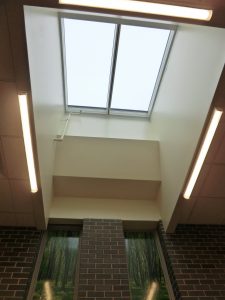
HDC is currently punching out the project to enclose the existing courtyard at the Juvenile Court facility. The new multi-purpose room will provide space for meetings, classroom lectures, and even amateur theatrics. A new exterior entry vestibule and kitchenette area were also added. The enclosure features skylights that provide required light levels to the holding cells whose windows previously looked into the exterior courtyard.

Woodward Opera House


After we’ve been working on this project for 16 years, the Woodward Opera House is racing to finish by the end of 2017! Most of the work completed to date has been in the adjacent Annex building and the new construction behind it. The photo on the right shows the Promenade that forms the lobby serving the opera house on the third and fourth floors. The openings mark the location of the new main stair. The photo on the left shows the new top floor that encloses and showcases the Italianate roof brackets.

Donut Visits a Project Site


Due to the decent weather over the Christmas and New Year holidays, Donut went for walks at Franklin County Metroparks five times, 5-6 miles each! The last trip was to Glacier Ridge Metropark in Dublin, where we unexpectedly ran into a historical marker Hardlines Design Company had designed for the Ohio Department of Transportation marking the site of Mulzer Mill

Fall 2016

(originally posted October 31, 2016)

This Fall’s edition of What’s New highlights the company’s big move, showcases a rehabilitation project and a HABS project, and a new video offering featuring Donut.

Hardlines Design Company Sells Cultural Resources Division to Commonwealth Heritage Group

On April 11, 2016, HDC decided to divest itself of the cultural resources department in order to focus on architecture, historic architecture, preservation planning, and architectural history. See the following news articles for coverage:

Columbus Business First

Clintonville This Week

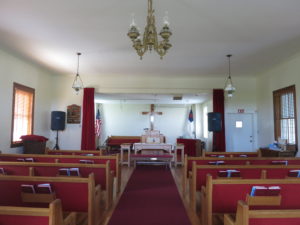
HDC Completes Rehabilitation of Historic Church

View of Exterior and Interior of the Wildermuth Memorial Church in Carroll, Ohio

In the Fall of 2015, HDC was commissioned by the Wildermuth Memorial Church Board to prepare an assessment and recommendations report to rehabilitate the church for the congregation’s 200th anniversary in 2016. The church was likely built in the 1830s and then moved across the street to the current location in 1875 and moved further back from the road in the early 1950s to accommodate a road widening project.  The Board approved the recommendations and commissioned HDC to move forward with the design and construction of all the recommended work. Exterior work consisted of a new faux wood shake roof on the church and a new asphalt shingle roof on the attached youth center, reconstruction of the furnace flue/chimney, and repair/refurbishment of the windows, siding, trim, and shutters. Interior work included removal of two levels of acoustical ceilings to restore the original ceiling height with a new drywall finish, removal of the carpet and restoration of the wood floor and base, and restoration of the original chancel floor with carpet only in the area of the 1970s expansion. The church held a 200th anniversary public open house on July 30, 2016, that was attended by almost 300 people.

HDC goes to Alaska for the First Time!

Exterior and interior views of Building 1190 at Eielson Air Force Base, Alaska

HDC was sub-contracted by Versar, Inc. to complete HABS documentation of a hangar proposed for demolition at Eielson Air Force Base near Fairbanks, Alaska, for the Alaska Air National Guard. In October, HDC President/Historic Architect Charissa Durst traveled to Fairbanks with Jeff Bates, who has been HDC’s HABS/HAER photographer for over 20 years. Building 1190 was one of four identical hangars constructed from 1946-1948 to prepare aircraft for transport to the Soviet Union under the lend-lease program after World War II. The other three hangars were lost to fire or demolished to make way for new construction. This hangar (Building 1190) was retained and has been used since 1958 as an air freight terminal under Air Mobility Command to deliver supplies to locations all over the world for all branches of the Department of Defense.

A Day in the Park with Donut

If you ever wondered what exactly Donut does when she’s at the park, check out this compilation video:


Fall 2015

(originally posted on October 22, 2015)

This Fall’s edition of What’s New showcases archaeologists in the field, historical building surveys, a special achievement for one of HDC’s marquee projects, and a special treat from Donut, the office beagle

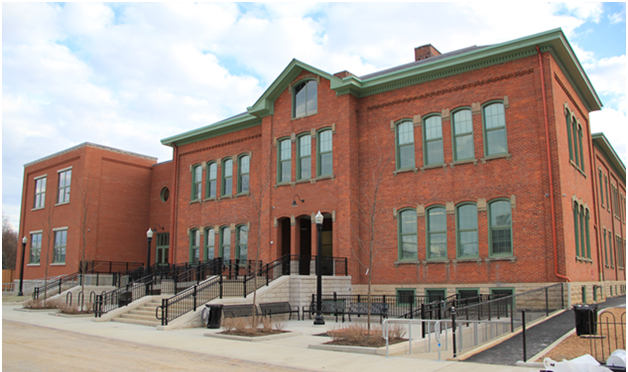
Stewart Elementary School project achieves LEED for Schools Silver Certification

Stewart Elementary School in the German Village neighborhood of Columbus, Ohio

In August 2015, Stewart Elementary School in Columbus, Ohio, was awarded LEED for Schools Silver Certification by the U.S. Green Building Council for its sustainable design and construction methods. Hardlines Design Company, the project’s Architect of Record, led a team that consisted of Columbus City Schools (Owner), Schooley Caldwell Associates (Associate Architect), MKSK Studios (Landscape Architects), Korda/Nemeth Engineering (MEP Engineers), Kabil Associates (Structural Engineers), Williams Interior Design (Furnishings), Smoot Elford Resource (Construction Manager) and Miles McClellan Construction Company (Contractor) to implement 51 points towards the school’s  certification.

LEED (Leadership in Energy and Environmental Design) is the nationally-accepted benchmark for the design, construction, maintenance and operation of green buildings. LEED ratings are based on a point system that measures the impact on the environment and those who use the building. The school’s sustainable design and construction efforts included:

  • Water savings of more than 20% through the use of low-flow fixtures and faucets.
  • Energy cost savings of 34% by utilizing a Variable Refrigerant Flow (VFR) system for heating, ventilation, and air conditioning to optimize energy performance.
  • Diverted more than 861 tons of construction waste from the landfill, or about 96% of all construction waste generated.
  • Using more than 10 percent recycled materials and 10 percent regionally sourced materials in the building’s construction, thereby saving transportation and production costs.
  • Rehabilitating an existing downtown structure to minimize demolition waste and combat sprawl, eliminating the need associated with new buildings to clear new land and build new roads and other infrastructure.

HDC Archaeologists Complete Fieldwork on Prehistoric Sites in Maryland

HDC archaeologist Terry Glaze excavates a test unit in Queen Anne’s County, Maryland

In August and September of 2015, HDC archaeologists were tasked by AECOM/URS to evaluate six prehistoric sites located within the construction limits for the expansion of Maryland Route 404 in Queen Anne’s County, Maryland. The six sites had been previously identified after a survey in 1990, with no further work conducted until this year. Working in the steaming late summer weather of Maryland’s Eastern Shore, HDC excavated 378 shovel test pits and 56 one-meter-square test units at the six sites, recovering approximately 1,600 artifacts. The artifacts mainly consisted of debitage, with a limited amount pottery, projectile points, fire-cracked rocks, and groundstone tools recovered as well, along with a handful of historical artifacts dating from the mid-1700s to the present. The sites appeared to represent a series of short-term resource procurement camps. Analysis of these sites for National Register eligibilty is ongoing.

HDC surveys historic resources at the NASA Glenn Research Center

Building 4 at the NASA Glenn Research Center in Brook Park, Ohio

HDC was sub-contracted by Ross Barney Architects to conduct a Historic Resources Survey and National Register of Historic Places assessment for the National Aeronautics and Space Administration (NASA) at Glenn Research Center (GRC) at Lewis Field in Brook Park, Cuyahoga County, Ohio. The survey and National Register assessment included architectural survey of the exteriors of all standing structures within the Central Area of GRC, development of a historic context, and recommendations for a National Register-eligible district. The survey and National Register evaluation was completed to assist NASA and GRC in maintaining compliance with Sections 106 and 110 of the National Historic Preservation Act of 1966, as amended, and to provide guidance for the management of historically significant built resources on the campus.

The GRC is highly significant in the history of American aeronautics. In 1940, the National Advisory Committee on Aeronautics (NACA), the precursor to NASA, acquired land near the Cleveland airport for an aeronautics research facility, the Aircraft Engine Research Laboratory. The focus of this facility would be on developing and improving liquid-cooled and air-cooled engines. Over the years, this facility would contribute to advances in turbojet technology, deicing, and rocket propulsion.

HDC staff performed the survey in June and documented 128 buildings, structures, and objects. After evaluating the resources, HDC proposed the creation of a historic district composed of 82 contributing resources. In addition, HDC recommended that two wind tunnel complexes, the 8×6 Foot Supersonic Wind Tunnel complex and the 10×10 Foot Supersonic Wind Tunnel complex, are individually eligible for the National Register, in addition to contributing to the proposed GRC historic district. HDC also recommends that Building 4, the Flight Research Building, is individually eligible for the National Register and contributes to the proposed historic district, because it is the most iconic building on the GRC campus, and the building retains the integrity necessary to convey its significance as a large open hanger and support facilities still used to house aircraft for GRC.

Donut’s First Movie!

Donut the Beagle has often been the target of still photographers since she first arrived at the office in 2004. When she posed for a photograph with Santa Claus at a local Petsmart, the photographer commented that she was “very attentive for a beagle.” (Was that a compliment?) When HDC president Charissa Durst first got a smartphone with video, she made test videos of Donut running around the backyard. It wasn’t until this year that she attempted to edit one of her videos and add free online music to it. This video shows Donut actually swimming in Big Darby Creek at Prairie Oaks Metro Park, with music by The Builders and the Butchers called “Cradle on Fire.”


Spring 2015

(originally posted by Charissa Durst on March 13, 2015)

2015 is a special year for Hardlines Design Company. Twenty-five years ago, Charissa Durst and Don Durst founded our company, never imagining the places it would take them and the people they would form relationships with. Throughout the year, our blog will highlight some of the special projects we’ve completed over the last 25 years. Read on for a sample!

The Ohio History Connection Commissions HDC with a Historic Structure Report

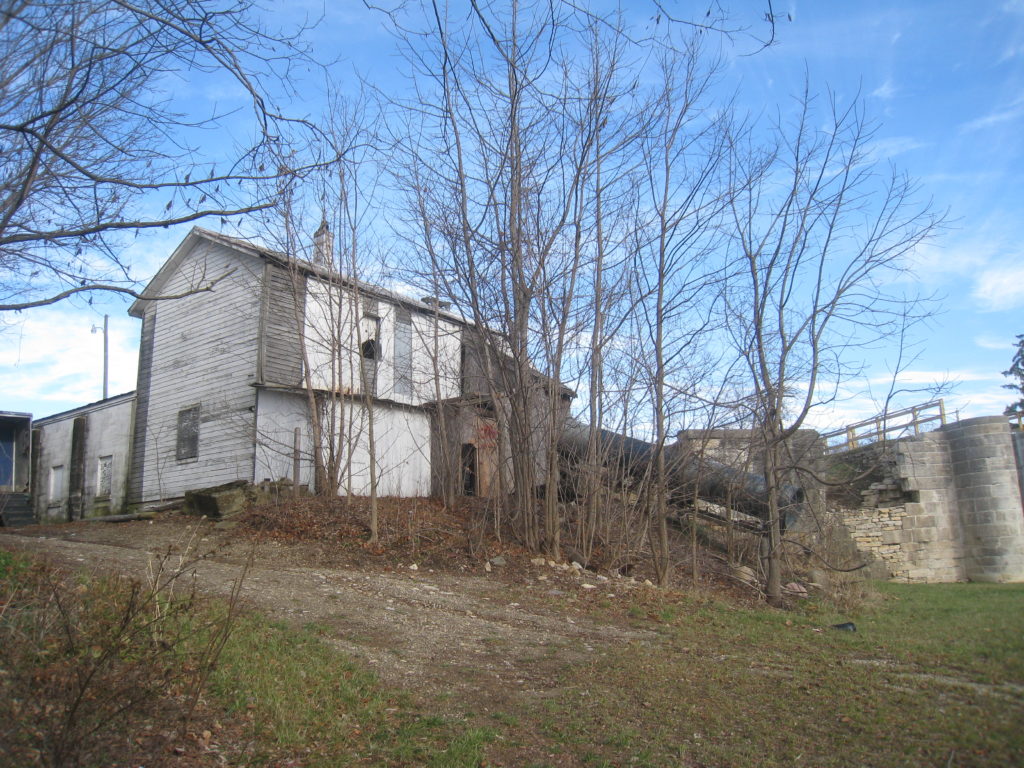
The Ohio History Connection (formerly the Ohio Historical Society) awarded HDC a contract to prepare a Historic Structure Report (HSR) of the Locktender’s House at the Lockington Locks Historic Site in Lockington, Shelby County, Ohio. The HSR will support the client’s efforts to obtain funding to complete the restoration and stabilization of a bypass spillway that lies between Lock 1 and the house, and to restore the house to its 19th century appearance. This site is the highest point of the Miami and Erie Canal. Construction on the canal started in 1831, and the canal was in active operation between 1845 and 1877. The village of Lockington (originally Lockport) was specifically founded in 1837 as construction on the Miami and Erie Canal moved north from Piqua. The Locktender’s House was the residence of the lock master during the period of operation for the canal. The lock master was in charge of overseeing the locks, including operation and maintenance.

The project is particularly challenging since very little documentation exists for the property. HDC staff field measured the building in order to produce CAD plans and elevations, and constructed a history of alterations through physical inspection and interviews with long-time nearby residents. This project is of special interest to company president Charissa Durst, who, as a graduate student, completed a design studio project at the site and inventoried several buildings in nearby Piqua for an architectural history class.

25 Years of Hardlines: A Look Back at HDC’s Work at Hill Air Force Base 

In the spring of 1993, the National Park Service in Denver issued a request for proposals to prepare a Cultural Resources Management Plan (CRMP) for Hill Air Force Base in Utah. HDC had recently completed a similar project at the Naval Submarine Base in San Diego, and decided to submit a proposal. We were in the process of wrapping up the fieldwork for the documentation of the River Street Historic District in San Jose, California, which is why President Charissa Durst ended up writing and submitting the proposal from her aunt’s house in Lafayette, California, and made the discovery that back then, Federal Express offices in the Pacific Time Zone close way earlier than those in Eastern Time Zone!

The Hill AFB project involved inventorying all buildings/structures on the base that were 50 years of age or older. In the end, we completed 396 State of Utah inventory forms. The base originally consisted of two installations that later merged: Hill Field and the Ogden Arsenal. The buildings on the Hill Field side were fairly typical Army Air Corps facilities associated with World War II. The Arsenal buildings, however, were very interesting. They dated back to the 1920s and were designed to store explosive ordnance. The buildings included underground igloos, above-ground munitions magazines, and a railroad complex to move the ordnance around the base. We also encountered two civilian buildings associated with the Uintah Pipeline Company and the Wasatch Gas Company built in the 1930s.

In addition to the inventory forms, HDC was also tasked with preparing National Register of Historic Places district nominations for two potential Historic Districts: Hill Field and Ogden Arsenal. After completion of the base scope, the National Park Service commissioned HDC to prepare Level I HAER drawings of the more significant buildings. HDC ended up documenting three buildings associated with Hill Field and seven associated with the Ogden Arsenal.

HAER drawing of the various ordnance igloos on the base and cover of popular history.

After completion of the HAER documentation, the Air Force commissioned HDC to prepare a popular history titled From Arms to Aircraft. The historical text was prepared by a local university, which HDC incorporated into the book along with the HAER drawings and photographs. The book proved to be very successful and for many years was given to employees when they retired from the base.

Donut’s Christmas Sweater

Back when Bagle the Beagle and Sadie the Beagle roamed the office, they would each receive a Christmas goodie bag of rawhide treats. Although rawhide is reputed to cause dogs to become aggressive, we never had a problem with Bagle or Sadie. Donut, however, definitely became aggressive over rawhide treats, proving that it isn’t just an urban myth. As a puppy, she really liked rope toys (Bagle refused to touch them) and toys where she had to unscrew parts in order to get to the treat, which she figured out in 5 minutes. These days, we just get her clothing, such as bandanas, sweaters, and coats. Bagle refused to wear even a bandana, but Donut seems to prance around to show them off. We figure it’s because she has long legs for a beagle so the bandana doesn’t trip her. This holiday season, Donut received a bright green “Snoopy” sweater, just in time for the sub-zero temperatures in January!

Support historic preservation in Ohio – it’s the Wright thing to do!

(originally posted by Andy Sewell on March 3, 2015)

Wilbur and Orville may have been looking to the future with their work developing powered flight, but they also knew it was a good thing to support historic preservation – with their tax returns!

https://www.youtube.com/watch?v=ipt2rP-Q3D4

Supporting the Ohio History Fund on your 2015 Ohio state taxes is easy, tax-deductable, and a great way to show your support for your state! Donations from the Ohio History tax check-off are used to fund local history projects throughout Ohio through the History Fund grant program.

With the Ohio History Fund, Ohio citizens can help support our local and state historical sites and preserve significant pieces of our history. Funds donated through your tax-deductable donation go straight to funding local history projects. For just $8, the average donation and the price of a couple fancy coffees at the corner coffee shop, you can help repair a roof, preserve rare documents, or help connect local school kids to their Ohio heritage.

Where does your donation go? All donations directly support the History Fund, which was created to help fund local, regional, and statewide projects, programs, and events linked to the expansive history of Ohio. The program is a competitive matching grants program and requires successful grant applicants to have a matching funding source. For more information about the History Fund grant program and how to apply, visit ohiohistory.org/historyfund.


Don’t take Historic Preservation for Grant-ed!

(originally posted by Andy Sewell on January 26, 2015)

President Ulysses S. Grant knows his duty when filing taxes – he contributes to the Ohio History Fund on his state tax return.

https://www.youtube.com/watch?v=iclR7JW9IdM

Supporting the Ohio History Fund on your 2015 Ohio state taxes is easy, tax-deductable, and a great way to show your support for your state! Donations from the Ohio History tax check-off are used to fund local history projects throughout Ohio through the History Fund grant program.

During its first year of operation, the Ohio History Fund gave out matching grants to 11 projects, ranging from the digitization of rare, pre-WWII color movie film documenting small-town Ohio to improving artifact curation storage and even building public restrooms at Whitewater Shaker Village, allowing the site to be open for public visitation for the first time since restoration efforts began. Supporting historic preservation has never been so easy!

It’s simple to contribute – just check off the box on your tax return and fill in the dollar amount. Remember, your donation is tax-deductable!

Annie supports historic preservation in Ohio -so should you

(originally posted by Andy Sewell on January 13, 2015)

Annie Oakley, famed Ohioan, was known for being on the mark. Why should filing her taxes be any different?

https://www.youtube.com/watch?v=0RiS-63Nc78

Annie Oakley didn’t have to think twice about supporting historic preservation by donating to the Ohio History Connection (formerly the Ohio Historical Society) on her 2015 Ohio state tax return. Local communities and historical organizations throughout Ohio are greatly supported through the generosity of Ohioans. Just a small, tax-deductable, donation of $8 (a cheap lunch) helps keeps lights on, historic documents and collections preserved, and our children educated in the history and heritage of Ohio.

It’s easy to contribute – just check off the box on your tax return and fill in the dollar amount. Remember, your donation is tax-deductable!

Where does your donation go? All donations directly support the History Fund, which was created to help fund local, regional, and statewide projects, programs, and events linked to the expansive history of Ohio. The program is a competitive matching grants program and requires successful grant applicants to have a matching funding source. For more information about the History Fund grant program and how to apply, visit ohiohistory.org/historyfund.

Historic preservation success: Stewart Elementary School opens!

(originally posted by Andy Sewell on January 6, 2015)

Yesterday marked the grand re-opening of the historic Stewart Elementary School in German Village, a project that Hardlines Design Company has worked hard to help Columbus City Schools complete. The renovated, 141-year-old building was redesigned to incorporate the latest technology and accomodate the needs of 21st-century schoolchildren, while retaining its historic character. Reviews of the school are positive, as evident from this article in the Columbus Dispatch:

Kelly Graham grew up in German Village and attended Stewart from 1987 to 1994. (Her husband will not let her forget that he once defeated her in the Stewart Elementary spelling bee, even though he was a grade below her.)

Graham said she appreciates that the renovated building retains its old charm, with high ceilings, wood floors and huge windows that teachers can open on nice days.

“I think it will definitely have a positive effect,” said Graham, 31, an instructional assistant at Stewart with two children attending the school. “The kids are now excited to use it.”

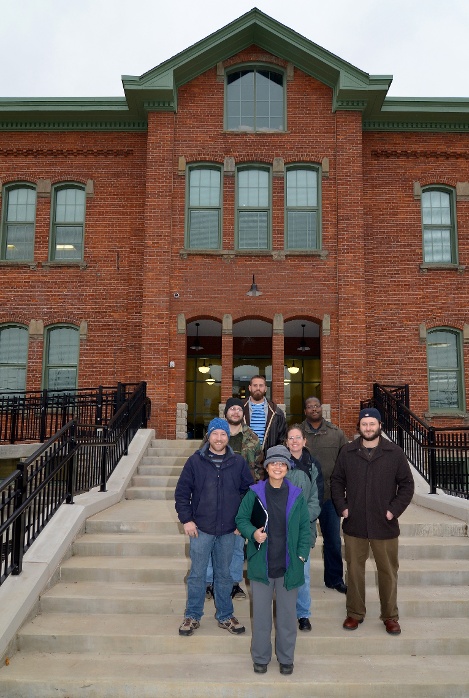
A group of Hardlines employees tours Stewart Elementary School shortly before it opens. Company president Charissa Durst is in the foreground. Photo credit: Jeff Bates